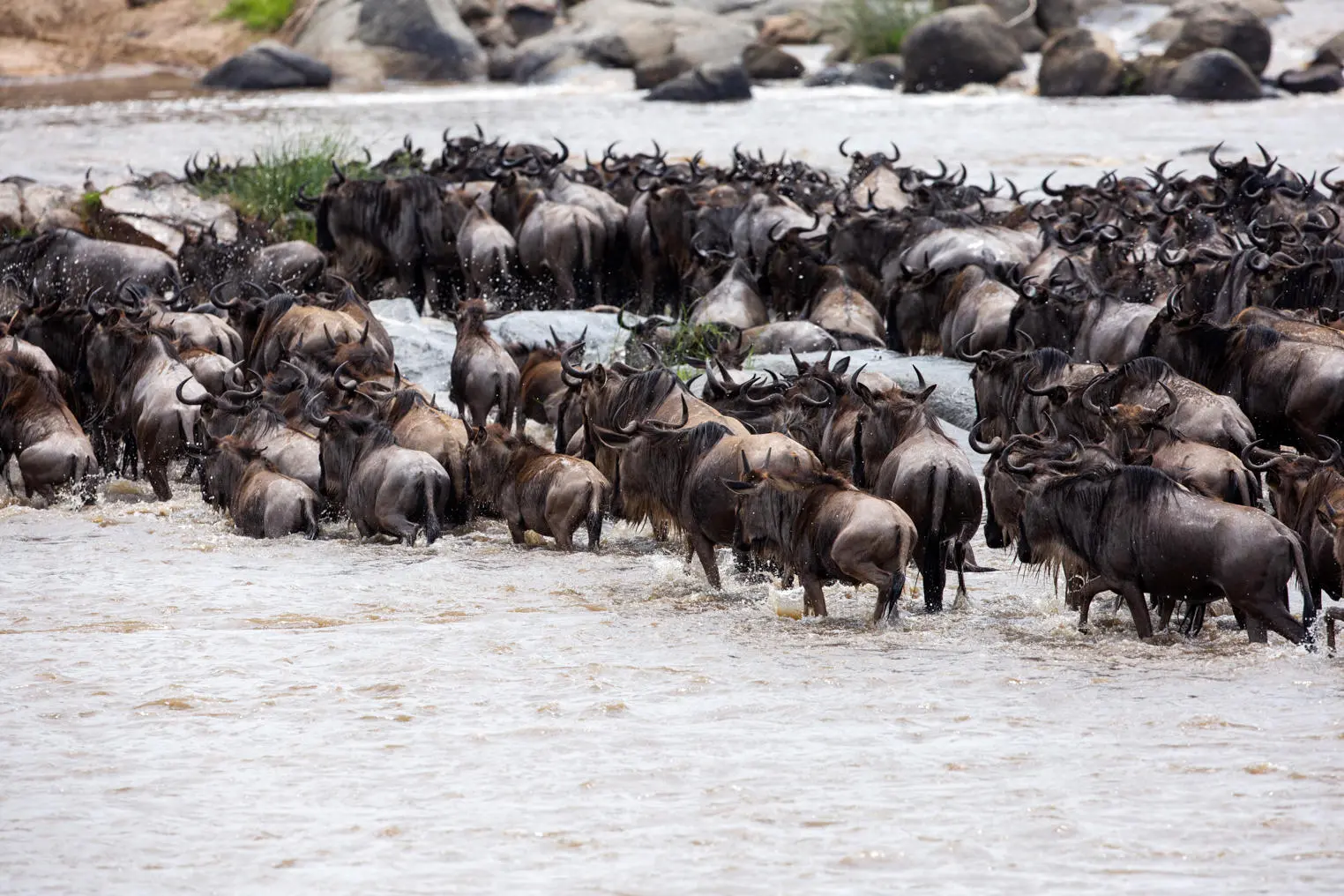
Great Migration Safaris • 2026–2028

GREAT MIGRATION SAFARIS IN SERENGETI & MASAI MARA

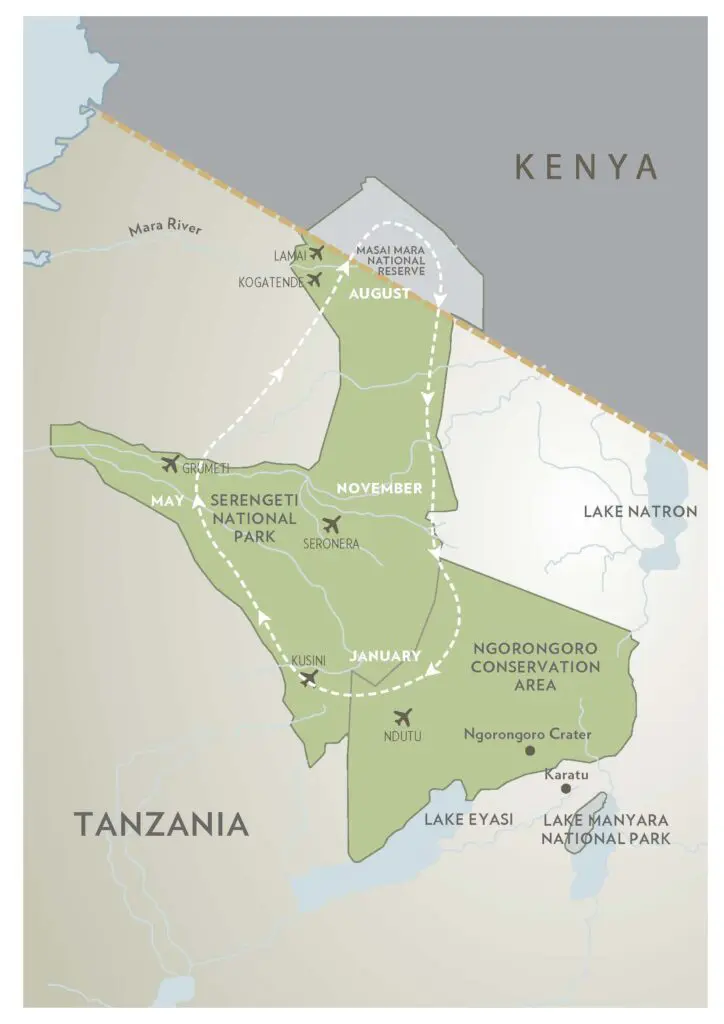
Two prime windows. Two very different moods. January–March is calving season in Ndutu and the Southern Serengeti — fresh green plains, newborn calves, and predators never far. July–October pulls the story north — river corridors, tense crossing attempts, and long, cinematic days in Northern Serengeti and the Masai Mara.

Designed for the Migration — not for checking boxes

The Great Migration isn’t a single sighting. It’s a moving ecosystem — dust, thunder, silence, then sudden motion. The best safaris don’t chase hype. They place you in the right terrain, for enough nights, with the freedom to follow what’s real.

This page features 20 Great Migration itineraries built only around the most consistent windows: Jan–Mar (calving) and Jul–Oct (river crossings). Choose a route that matches your rhythm — fly-in ease, a classic road journey, or a Kenya–Tanzania combination that shows both sides of the story.

Jan–Mar • Calving Season Jul–Oct • River Crossings Ndutu • Serengeti • Masai Mara 5–12 Days Midrange • Comfort • Fly-in • Combo
Great Migration safari in the Serengeti
0 migration safaris found

Migration guides that keep it simple

Use these short, practical resources to match your travel month to the right landscape, understand the difference between calving season and crossings, and choose camps that place you close to the action — with the right level of comfort.

Great Migration safari FAQs

What is the best time to see the Great Migration?
The most dependable windows are January–March (calving season in Ndutu and South Serengeti) and July–October (river crossing season in Northern Serengeti and the Masai Mara). Share your travel month and we’ll guide you to the right zone.
Are river crossings guaranteed?
No — crossings are wild, natural events. The best approach is staying several nights in the correct corridor so your guide can respond to herd movement and river conditions without pressure.
Which is better: Ndutu calving season or river crossings?
Ndutu (Jan–Mar) feels intimate and intense — newborn calves, predators nearby, green plains and beautiful light. River crossings (Jul–Oct) are dramatic, unpredictable and often require patience. Both are extraordinary; they simply feel different.
How many days do I need?
7–10 days is the sweet spot for most travellers. It gives you proper time in the migration zone plus a second highlight like the Ngorongoro Crater (or a conservancy in Kenya) without feeling rushed.
Can I combine a Great Migration safari with Zanzibar?
Yes — it’s one of Africa’s best endings. We usually recommend migration first, then the coast, so you finish softly: ocean air, slow mornings, and time to exhale after the Serengeti.
What does “From” price mean on this page?
It’s a baseline per person sharing for the itinerary length, calculated from a per-person-per-day range based on comfort level. Exact inclusions differ by itinerary — open the package page for full details, then request a quotation for your dates.
Migration safari FAQ

Tell us your month — we’ll place you in the right landscape.

Share your travel window, number of travellers, and preferred comfort level. We’ll recommend the strongest migration zone for your dates, then fine-tune camp locations and pacing so the safari feels intentional and unhurried.

WhatsApp