Itinerary overview — 10 Days Kenya & Tanzania Reserve Circuit
Nairobi → Mara Naboisho → Serengeti (Namiri) → Ruaha (Jabali Ridge) → Dar es Salaam
A circuit for people who care about how a safari feels: calm arrivals, wild places with space, and camps that hold you gently between drives. You begin polished, move into conservancy privilege, step into Serengeti scale, and end in Ruaha—one of Tanzania’s most satisfying, least crowded wild systems.
At a glance
- Duration: 10 days / 9 nights — fly-in luxury pacing, built to feel effortless.
- Style: Premium reserve circuit • private guiding available • flexible activities (including walking + night drives where permitted).
- Start: Jomo Kenyatta International Airport (NBO), Nairobi.
- End: Julius Nyerere International Airport (DAR), Dar es Salaam.
- Availability guidance: Typically strongest in January–March and June–December (subject to camp space and flight schedules).
Day-by-day (detailed)
You arrive into Nairobi and are met quietly—handled, not herded. There’s a particular luxury in the first hours being simple: a private transfer, a calm welcome, and a boutique atmosphere where you can come back to yourself after travel.
If you feel like easing into Kenya with something light, we can arrange gentle city experiences—an unhurried visit to the Karen Blixen Museum, or a brief stop at the Giraffe Centre. Or you can do the most luxurious thing of all: close the door, breathe, and let tomorrow begin fresh.
This morning you transfer to Wilson Airport and lift off toward the greater Mara ecosystem. The transition is immediate: city geometry dissolves into river lines and open country, and then—softly—the first wildlife shapes appear.
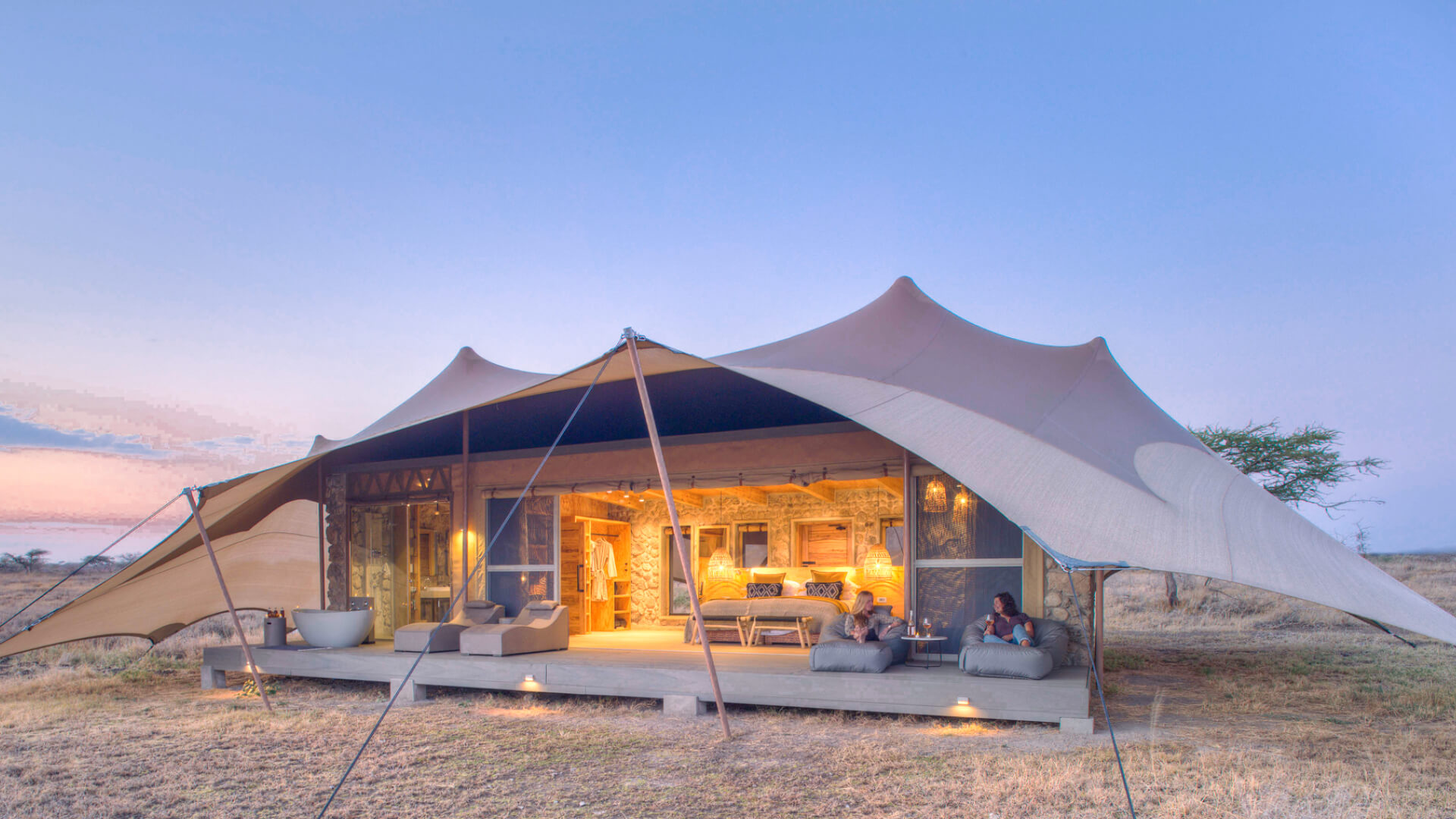
Mara Naboisho Conservancy is the Mara with breathing room. It borders the famous reserve, reveal- ing the same wildlife story, but with fewer vehicles and more freedom. Your first drive is often the best kind—no expectations, no rush, just the thrill of arriving somewhere that feels like it has been waiting for you.
Naboisho isn’t about ticking species. It’s about time—time to follow a sighting without a queue behind you, time to sit with a moment until it shows you its second act. Predators do well here, and the conservancy’s open plains and valleys create a landscape made for pursuit: lion in the grass, cheetah scanning, elephant moving with deliberate calm.
After lunch the day slows intentionally—shade, a book, the quiet theatre of wildlife passing at a distance. Later, you head back out as the air cools. And because you’re in a conservancy, you can add what the main reserve often cannot: a night drive. A different world appears—smaller eyes, softer steps, the hush of a spotlight catching something rare.
Today is for texture. A walking safari changes your relationship with the landscape—suddenly you notice the language of tracks, the architecture of termite mounds, the way the wind carries information. It’s not adrenaline. It’s intimacy.
If you want cultural depth, we can arrange a respectful community layer that feels informative rather than staged—stories that add context to the land you’re moving through. And for travelers who want the purest kind of memory, there’s the option of fly-camping: simple, elegant, and quietly unforgettable—sleeping under the sky with the conservancy around you.
This morning you leave Kenya by air and enter Tanzania the way it should be entered—quietly, above it all. The Serengeti reveals itself in long lines: river corridors, open grass, the faint geometry of game paths. Even before landing, you can feel the scale.
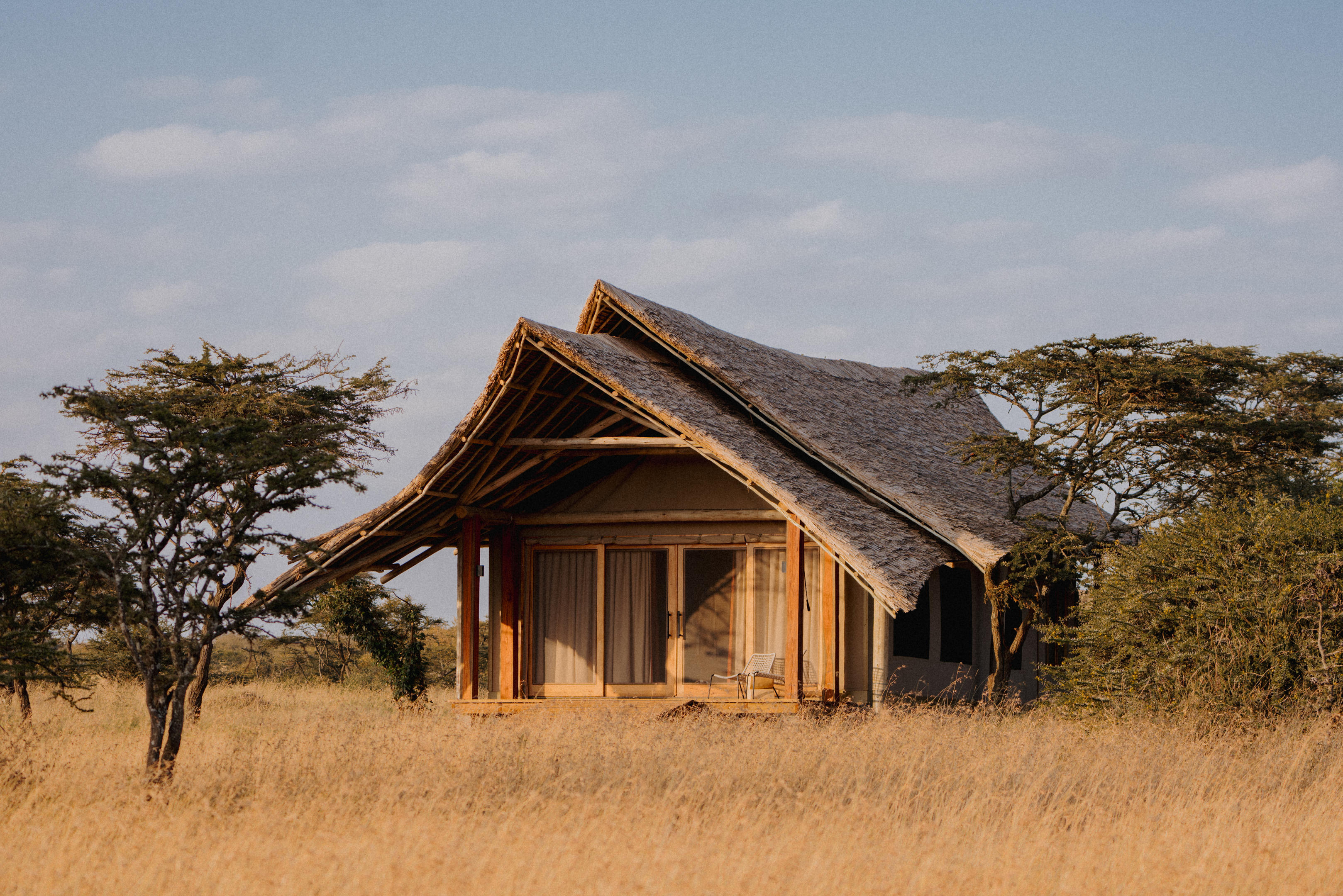
Namiri Plains sits in a region renowned for big cats—especially cheetah. The pace here is elegant: a strong drive when the light is right, then space to return to camp and let the wilderness come to you. You’re not “on safari” all day; you’re living inside a landscape that keeps offering more.
Namiri rewards the patient eye. A cheetah doesn’t announce itself with noise—it appears, composed, in the kind of light photographers dream about. Lion move with heavy certainty. Serval can be a rare surprise, slipping through grass as if the plains made a secret just for you.
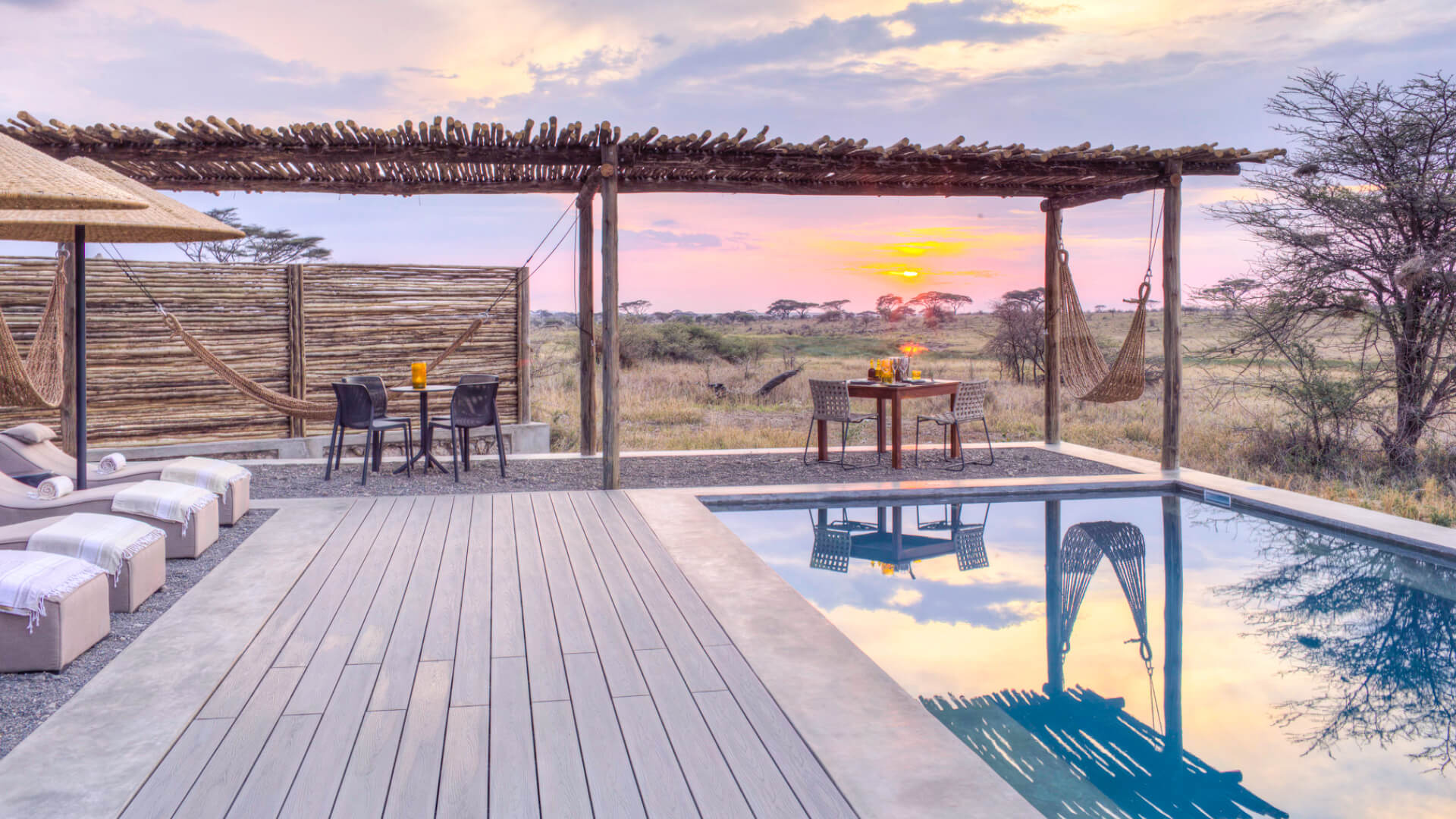
If you want the ultimate perspective, a sunrise balloon can be arranged—floating above the Serengeti as the day opens, then returning for breakfast with the world still quiet. Or you can keep it grounded: a long, thoughtful drive, a private bush moment, and then back to camp to reset—pool, shade, and the soft luxury of doing nothing.
Today you leave the Serengeti behind and enter a Tanzania many travelers never touch: Ruaha. The landscape changes from open plains to baobab forests, granite outcrops, and river systems that shape everything—where animals gather, where predators wait, where the drama lives.
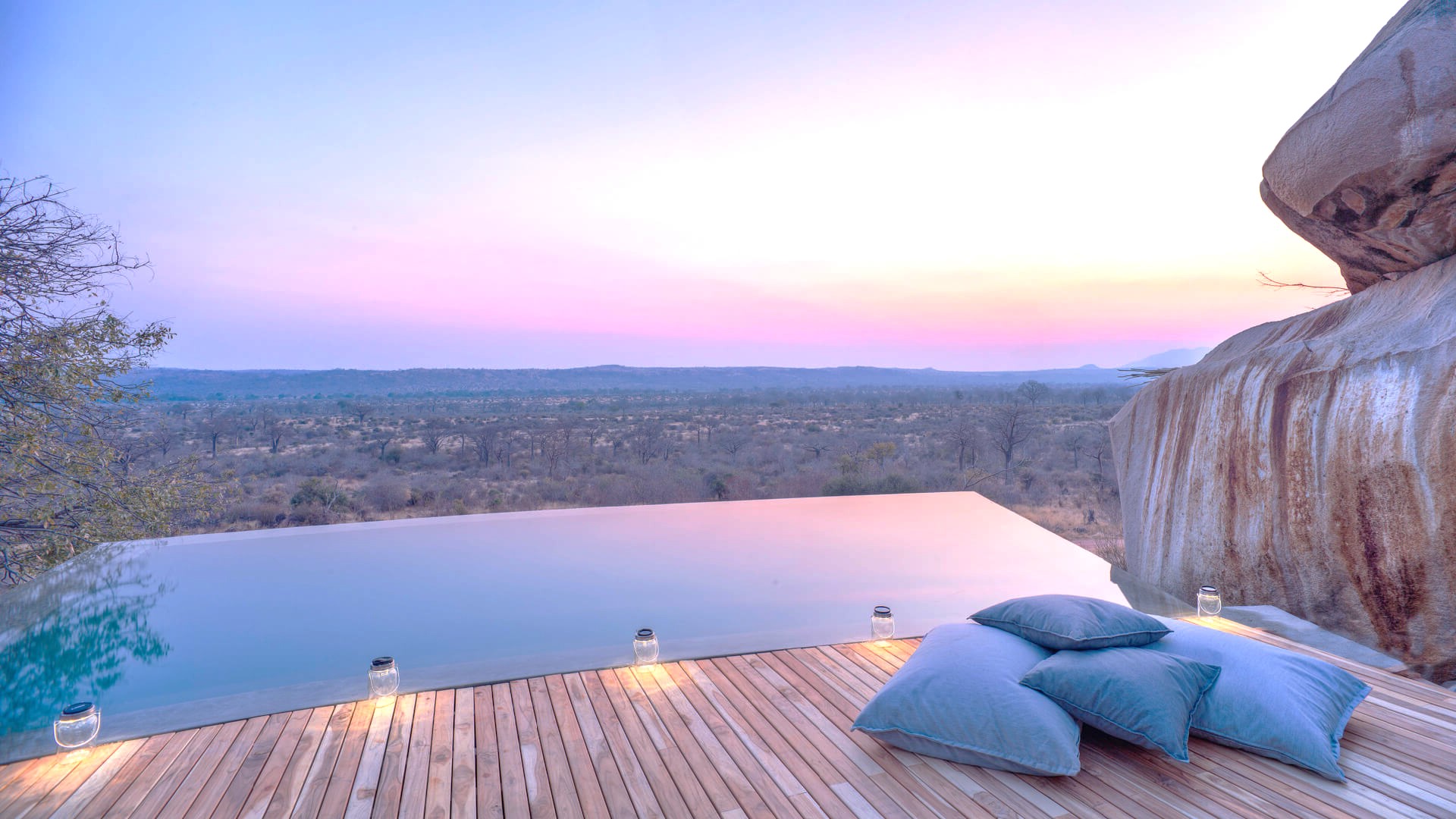
Jabali Ridge feels like it was placed there by someone with taste: suites tucked among boulders, views that pull you outward, and a calm confidence in every detail. You arrive, exhale, and head out—because Ruaha doesn’t do gentle introductions. It does wild.
Ruaha is resplendent in a way that feels personal—sun-bleached plains, palm-lined rivers, and baobabs that look like ancient witnesses. The wildlife can be extraordinary: lion, leopard, elephant, buffalo—and for many, the headline here is African wild dog. Elusive, intelligent, endangered—when you see them, you feel like you’ve been allowed into a private room.
Drives here have a different tone. Less traffic. More listening. Said plainly: it feels expensive because it’s quiet. And then you return to Jabali Ridge—cool stone, soft light, and a view that makes you slow down without trying.
Your final full day is intentionally flexible. Some guests want a focused drive at first light, then a slow return. Others want a bush walk to read the ground and the trees. And some want to let Ruaha come to them: an infinity pool, a quiet library, a long lunch, and then a late drive in perfect light.
The evening is the kind that stays: lantern glow, beautifully prepared food, and a sky that reminds you what “dark” really means. You don’t leave Ruaha feeling like you visited. You leave feeling like you were allowed to be there.
After breakfast, you transfer to the airstrip for your flight to Dar es Salaam for onward travel. We handle the timing so the day stays calm—no drama, no friction, just a clean, confident finish to a journey that was designed to feel seamless from the start.
How we keep this feeling exclusive
- Routing with intent: fly-in connections that protect your time and keep the rhythm unbroken.
- Access where it matters: conservancy freedom (night drives, walking) and low-traffic wilderness in Ruaha.
- Guiding quality: we match you with guides who read the moment, not a schedule.
- Comfort without noise: camps chosen for atmosphere, privacy, and consistency.
- Tailoring: honeymoon, celebration, photography focus, or “slow safari” pacing—built around you.