Itinerary overview — 12 Days Grand East Africa Great Migration Journey
Masai Mara • Northern Serengeti • Central Serengeti • Ngorongoro
This is a July–October journey for travellers who want the migration done with elegance — not rushed, not noisy, not chaotic. Each destination is given enough time to feel real: Mara for the classic Kenya chapter, Northern Serengeti for crossing corridors and suspense, Central Serengeti for big-cat depth, and Ngorongoro for a crater finale that feels clean and complete. In every destination, we offer two curated accommodation options — so the experience stays tailored without becoming complicated.
At a glance (Kenya & Tanzania)
- Duration: 12 days / 11 nights — time-rich, settled, and beautifully paced.
- Season focus: July – October (River Crossings window).
- Route: Nairobi → Masai Mara → Northern Serengeti → Central Serengeti → Ngorongoro → onward departure.
- Style: Comfort-level safari with elevated guiding, calm pacing, and smart flights.
Accommodation options (two in each destination)
- Masai Mara (Kenya): Soroi Mara Bush Camp or Entim Mara Camp
- Northern Serengeti (Kogatende): Nyikani Migration Camp (North) or Mara Under Canvas (Kogatende)
- Central Serengeti (Seronera): Serengeti Tortilis Camp or Kati Kati Tented Camp
- Ngorongoro (Crater rim / highlands): Ngorongoro Tortilis Camp or Ngorongoro Serena Safari Lodge
Day-by-day (detailed)
Nairobi is the soft edge of the journey — not the point, but the pause that makes the rest feel even sharper. You arrive, you exhale, and the city holds you lightly for one evening. It’s a chance to slow your tempo back down to safari pace: early nights, easy conversation, and the anticipation that quietly builds when you know tomorrow is a flight into open country.
The flight into the Mara is a subtle threshold — one moment you’re above farmland and small towns, the next you’re over grassland that looks like a painting. On arrival, everything becomes immediate: the air feels warmer, the horizons feel wider, and the day seems to open up.
Your first game drive is intentionally unforced. The guide reads the light, the movement, the mood of the plains. In the Mara, even the “first day” doesn’t feel like a warm-up — it feels like you’ve stepped into the correct version of Africa, the one you’ve been imagining for years.
Today is built around the luxury that matters most on safari: time. You can go early, when the air still holds the night and predators feel close. You can stay out longer, following a story until it finishes rather than leaving mid-sentence. Or you can balance it — a strong morning drive, a calm midday reset, and then the evening run when the light turns soft and the plains become cinematic.
The Mara doesn’t need hype. It needs space, patience, and a guide who understands that the best sightings aren’t always the loudest — they’re the ones you’re positioned for when the moment happens.
A final Mara morning gives you one more taste of Kenya light — then the journey pivots. You fly into Northern Serengeti, and the mood changes almost immediately: the landscape feels wilder, more spacious, more suspenseful. This is where the migration often carries a different tension — not just movement, but anticipation.
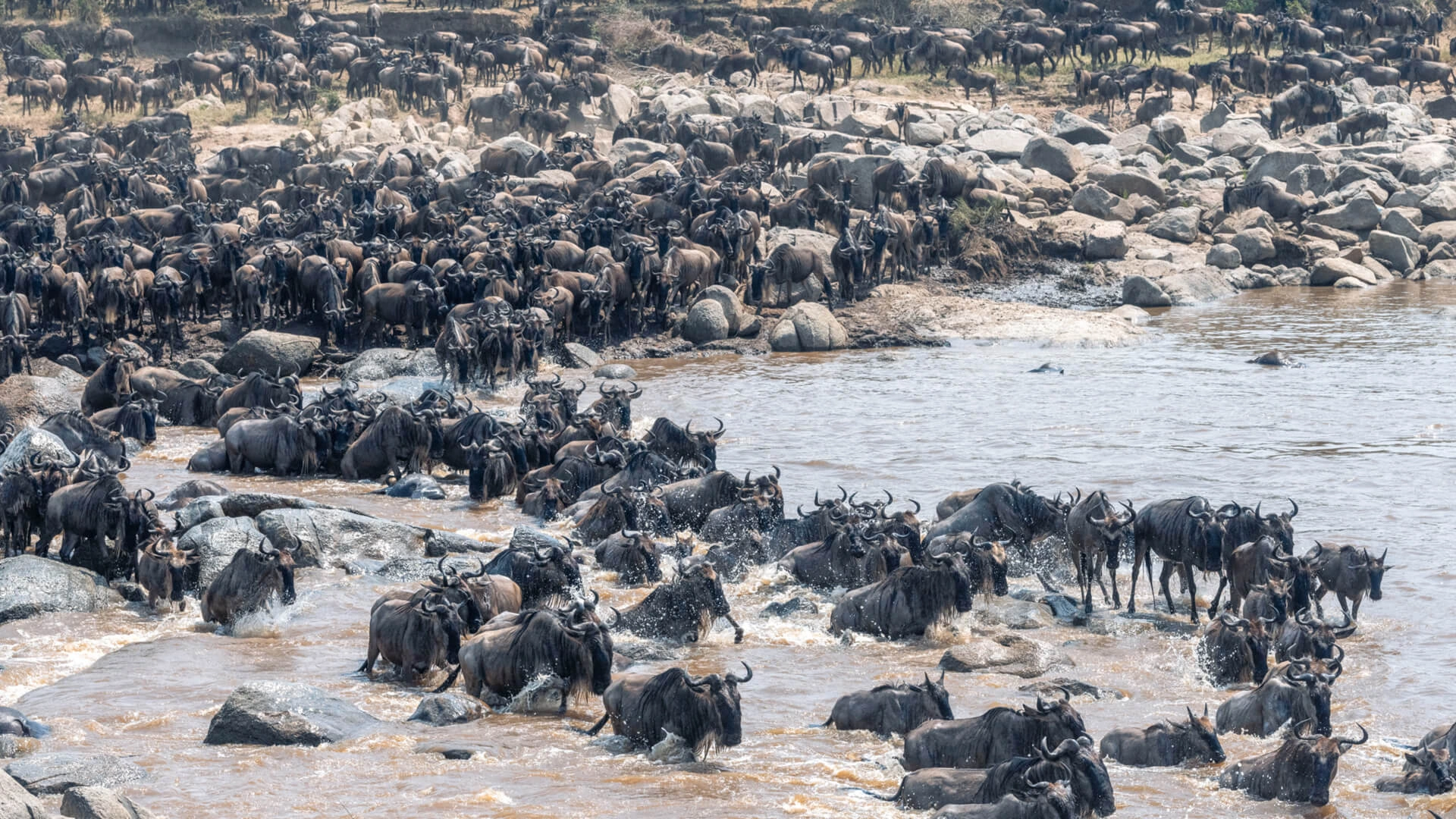
You arrive, settle, and head out if the light allows. The river corridors are not a guarantee of crossings — they are something better: a stage where you can wait properly, with time on your side, and with your guide reading the signs that most people drive straight past.
The most iconic migration scenes aren’t “found” — they’re earned. Today is designed with that understanding. You move between river bends and open plains with purpose, not panic. You spend time where the season makes sense. You watch the herds build. You notice how the air changes when something is about to happen.
And when the moment comes — whether it’s a crossing attempt, a surge of movement, or predators positioning along the edges — it feels electric precisely because you weren’t rushing to manufacture it. This is migration as it should be: raw, cinematic, and strangely calm in the way it takes over your entire attention.
The gift of a second full day in the north is that you don’t have to treat any sighting like the only chance. You can commit to the best positions, return to the most promising corridors, and let the season come to you. Often, the most unforgettable scenes happen on the “quiet” day — when the roads feel emptier and you’re willing to stay with the story longer.
There’s also a softness to Northern Serengeti that people don’t talk about enough: the wide spaces, the sense of distance, the way sunset arrives like a slow fade. It’s the kind of place that makes you feel privileged — not because it’s flashy, but because it feels real.
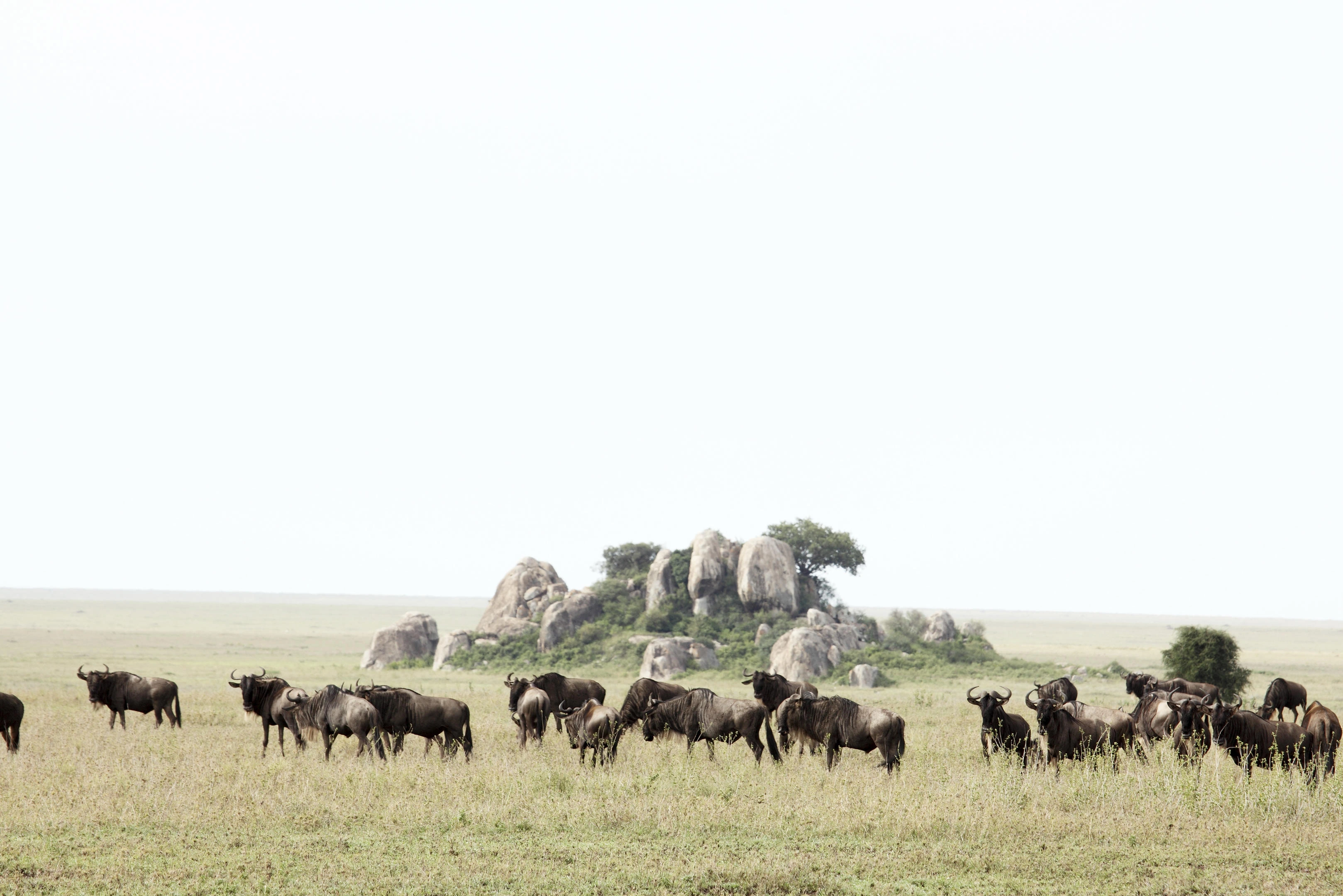
Today the journey changes texture again. You leave the river corridors and move into Central Serengeti — a landscape that feels like a different kind of cinema. Kopjes rise from the plains like quiet fortresses. The light lingers. And the predator story becomes more intimate — not only movement, but behaviour: resting, watching, deciding.
Even the drive feels like safari, not “transfer.” You can stop, you can explore, you can let the day unfold naturally — arriving in Central Serengeti with the sense that the story has deepened, not simply moved.
Central Serengeti is where the safari becomes less about chasing and more about knowing. Your guide works the kopjes and open plains with quiet confidence — reading tracks, scanning shade lines, choosing positioning that makes sightings feel intimate rather than crowded.
The day is paced around light. Early morning when the world is crisp. Midday rest when the sun climbs. Late afternoon when everything becomes cinematic and the plains feel endless. It’s the kind of rhythm that doesn’t just produce sightings — it produces memories that feel like scenes you can step back into.
This is your second full day in Central Serengeti — and that matters. It means you can linger. You can return to a promising area. You can wait through the stillness that often comes before movement. The best sightings are not always the most dramatic — sometimes they’re the most complete: the beginning, the middle, the shift in mood, and the finish.
By the time you return to camp, you feel that satisfying kind of tired — the kind that comes from living inside the landscape all day, not from being rushed through it.
After the Serengeti’s warmth and open horizons, Ngorongoro feels like a different world. The road climbs, the air cools, and the landscape shifts into highland greens. It’s a palate cleanser — the safari exhale before the final, concentrated chapter.
You arrive on the rim with time to enjoy it properly. A slower evening. A warmer jacket. The crater below you, waiting — not as something to “do,” but as something to enter with the right light and the right plan.
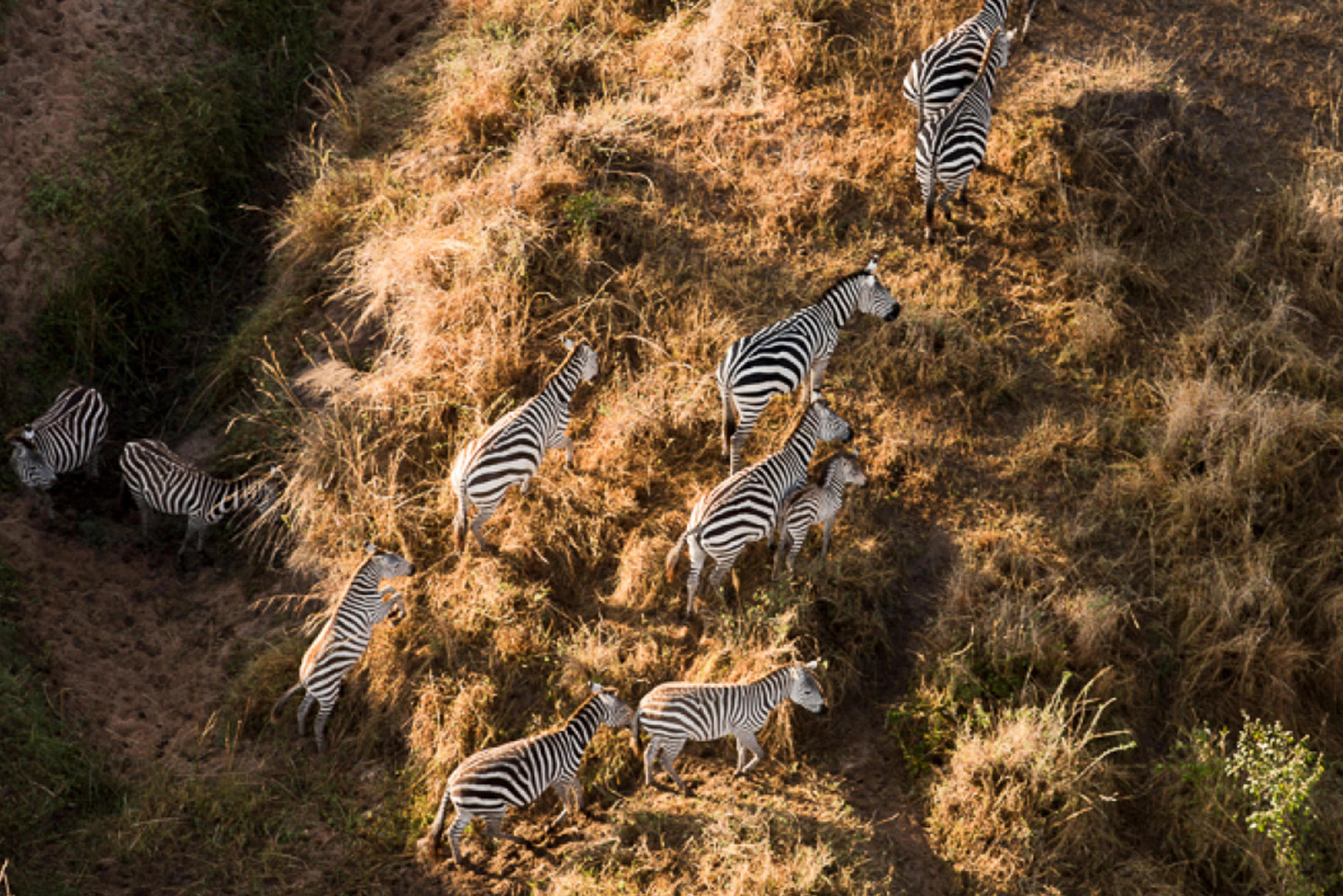
You descend early — before the light hardens, before the crater floor feels busy. Down inside, wildlife is condensed in a way that almost feels impossible: lions, buffalo, zebra, hyena, and the quiet possibility of black rhino somewhere beyond the immediate scene.
The difference is how we run the day: calm positioning, smooth pacing, and a picnic rhythm that doesn’t interrupt the story. By afternoon you rise back to the rim, where the air feels cooler and the evening feels earned. It’s the kind of finish that makes the whole journey click into place.
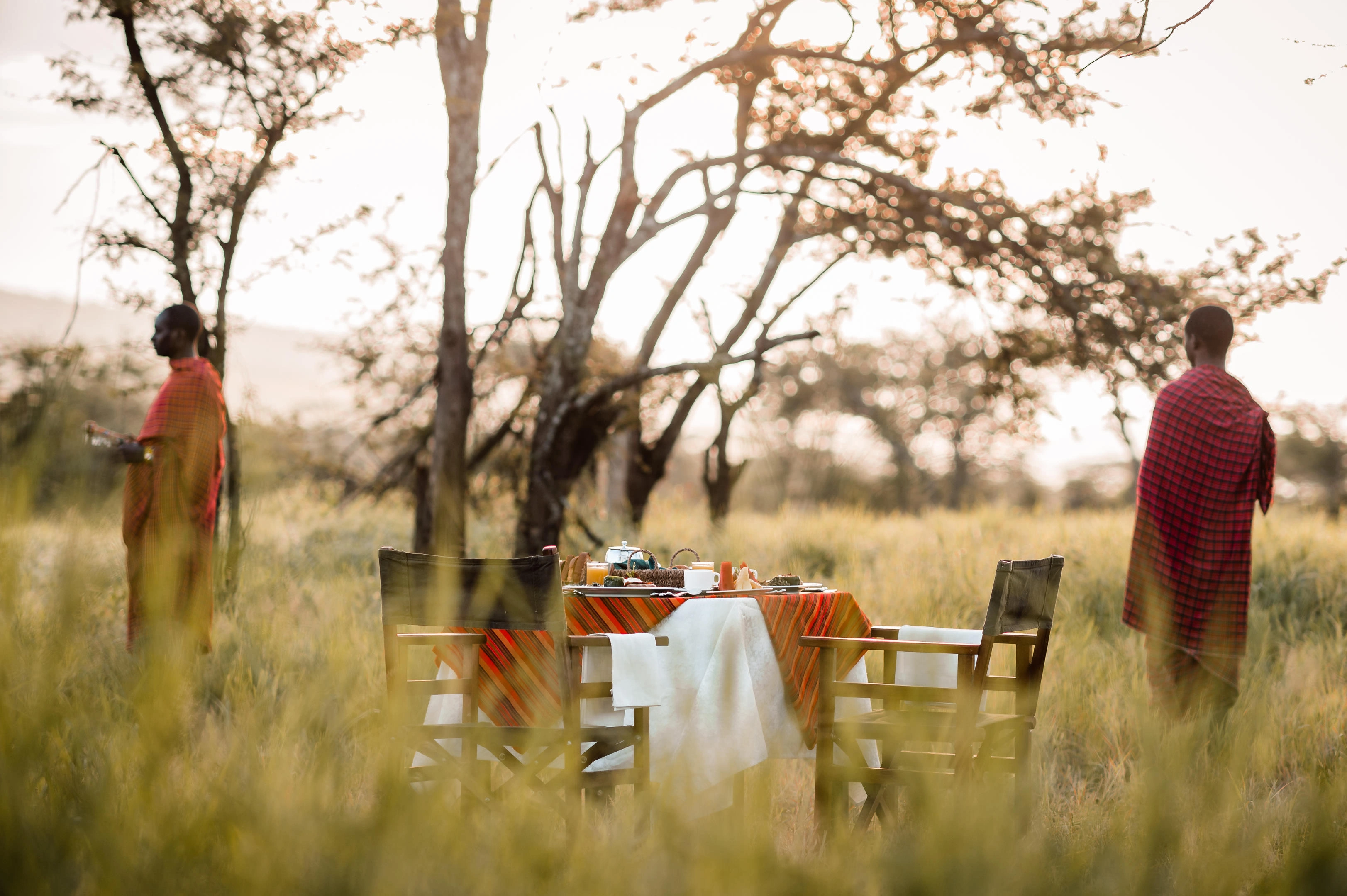
Your final morning is intentionally soft. Coffee in cool air. A last look across highland light. There’s a particular satisfaction in leaving after a journey that was paced properly — not squeezed, not frantic, not filled with unnecessary noise.
Then it’s onward to your next connection, carrying four clear chapters with you: Mara romance, Northern river suspense, Central Serengeti glow, and a crater finale that closed the story cleanly.
Fine-tuning this journey for you
- Crossing focus: we position you in the right Northern Serengeti corridors for your exact dates and keep enough nights to wait properly.
- Flight elegance: we protect prime wildlife hours by keeping travel clean and purposeful.
- Accommodation feel: choose Option 1 or Option 2 in each destination — and we can refine room types (family tents, best-view rooms, preferred camp positions) based on availability.
- Guide rhythm: you tell us if you like very relaxed, balanced, or wildlife-forward — we build the days around that.
- Privacy and pace: we keep the journey feeling personal, even in peak migration months.