One hour. Silence. The Serengeti or Tarangire spread beneath you as the sun breaks the horizon. A Tanzania balloon safari is not an add-on — it is the moment of the entire journey. Operator-built, expert-guided, champagne breakfast waiting on the plains below.
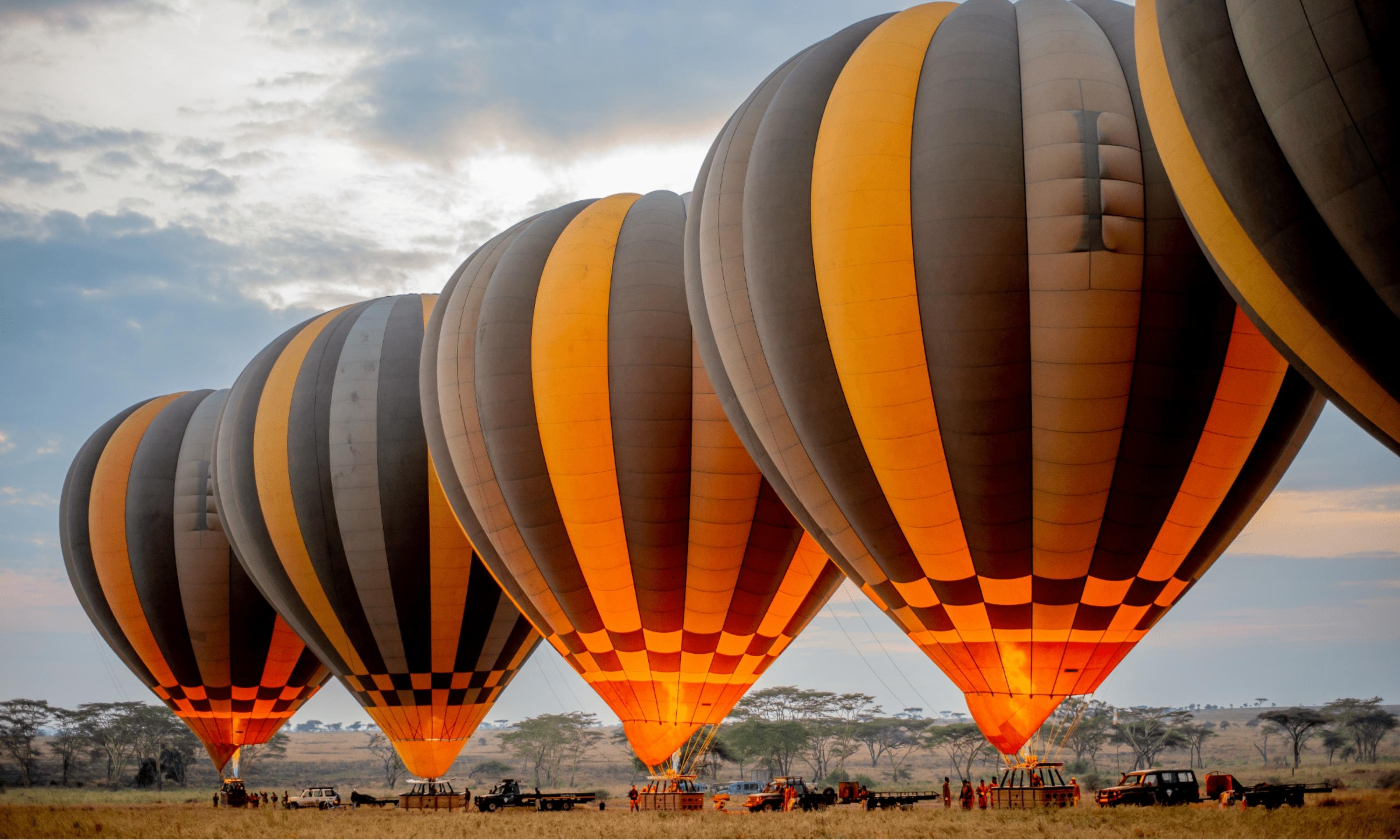
Both flights depart at sunrise and include a full bush breakfast in the wild.
A hot air balloon safari over the Serengeti or Tarangire is widely considered one of the top five wildlife experiences on earth. Floating silently at treetop level — and then high enough to see the curvature of the plains — you witness the African ecosystem from a perspective that no game drive, no walking safari, and no photographic blind can replicate.
Every balloon departs at first light, when predators are still active and the golden hour light is at its most extraordinary. The flight lasts approximately one hour. On landing, a white-linen champagne bush breakfast is served in the wild — your table set among the very plains you just floated over. We handle all logistics as part of your wider safari; the balloon is booked through us as your operator, not as a separate transaction.
Dawn inflation, the ascent, plains stretching to the horizon, and the champagne breakfast that follows. Click any image to enlarge.
Serengeti at Sunrise
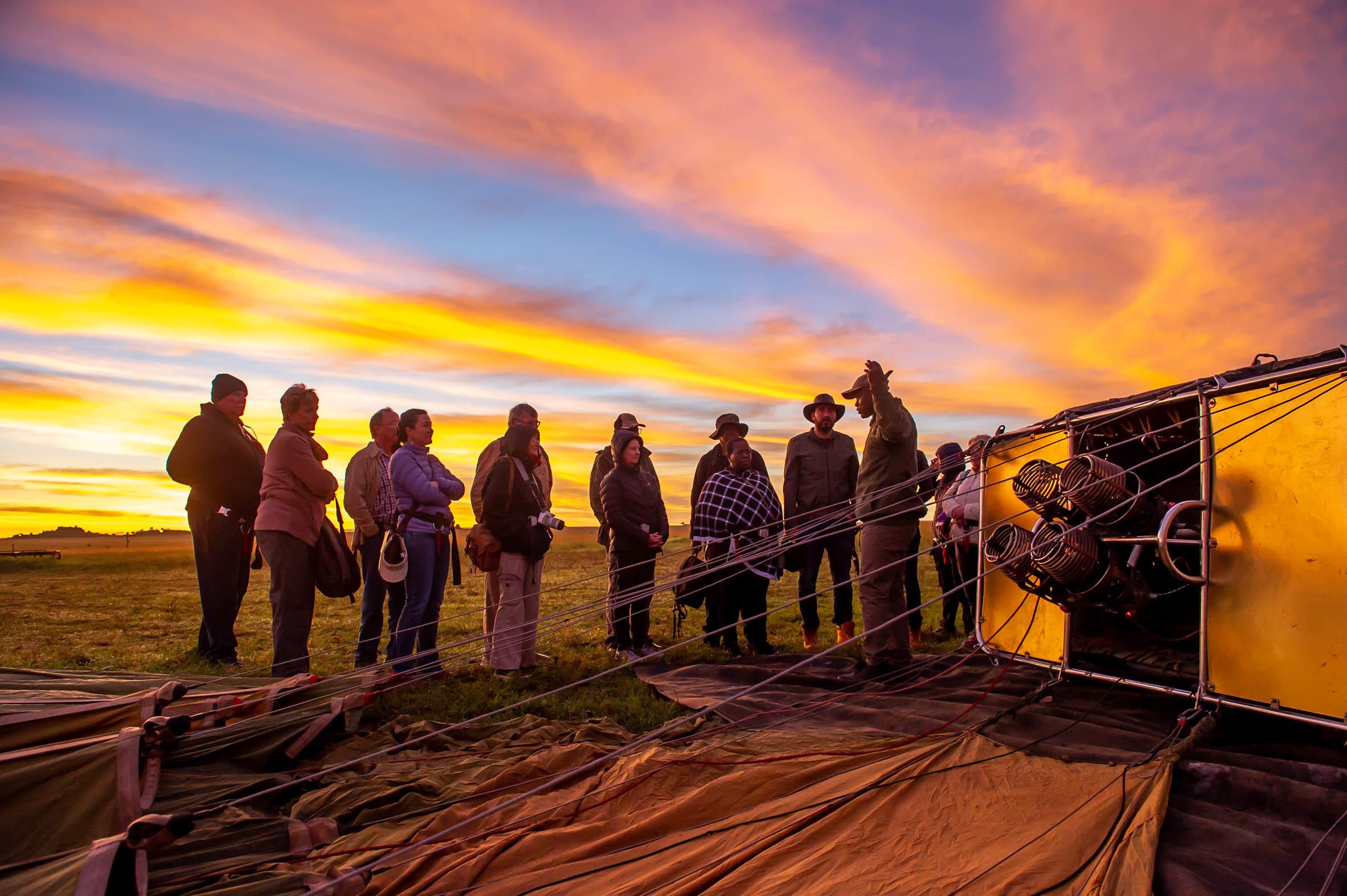
Pre-Dawn Inflation
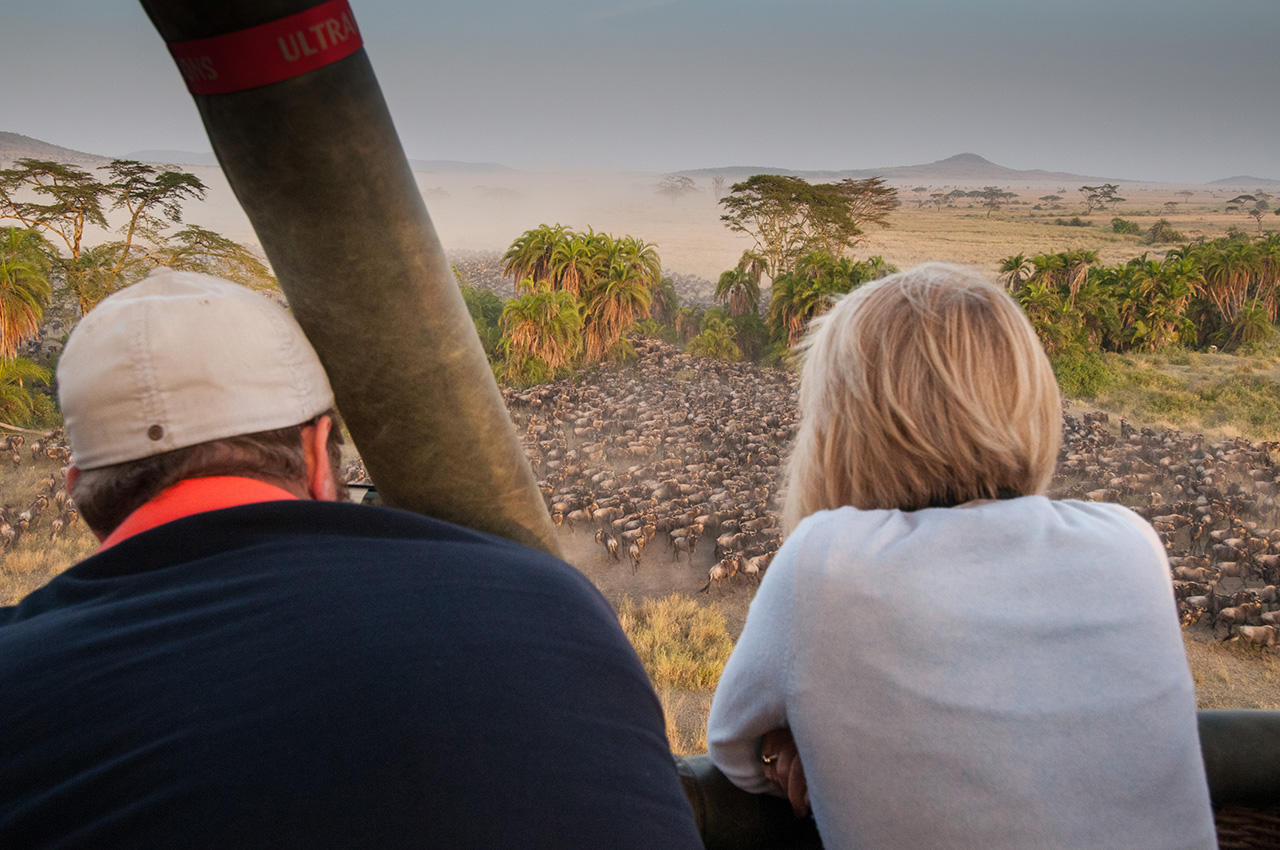
Migration From Above
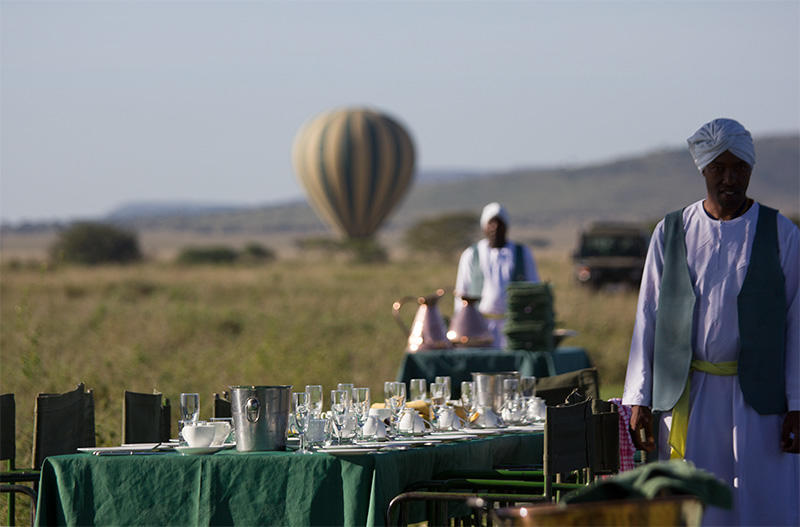
Bush Breakfast
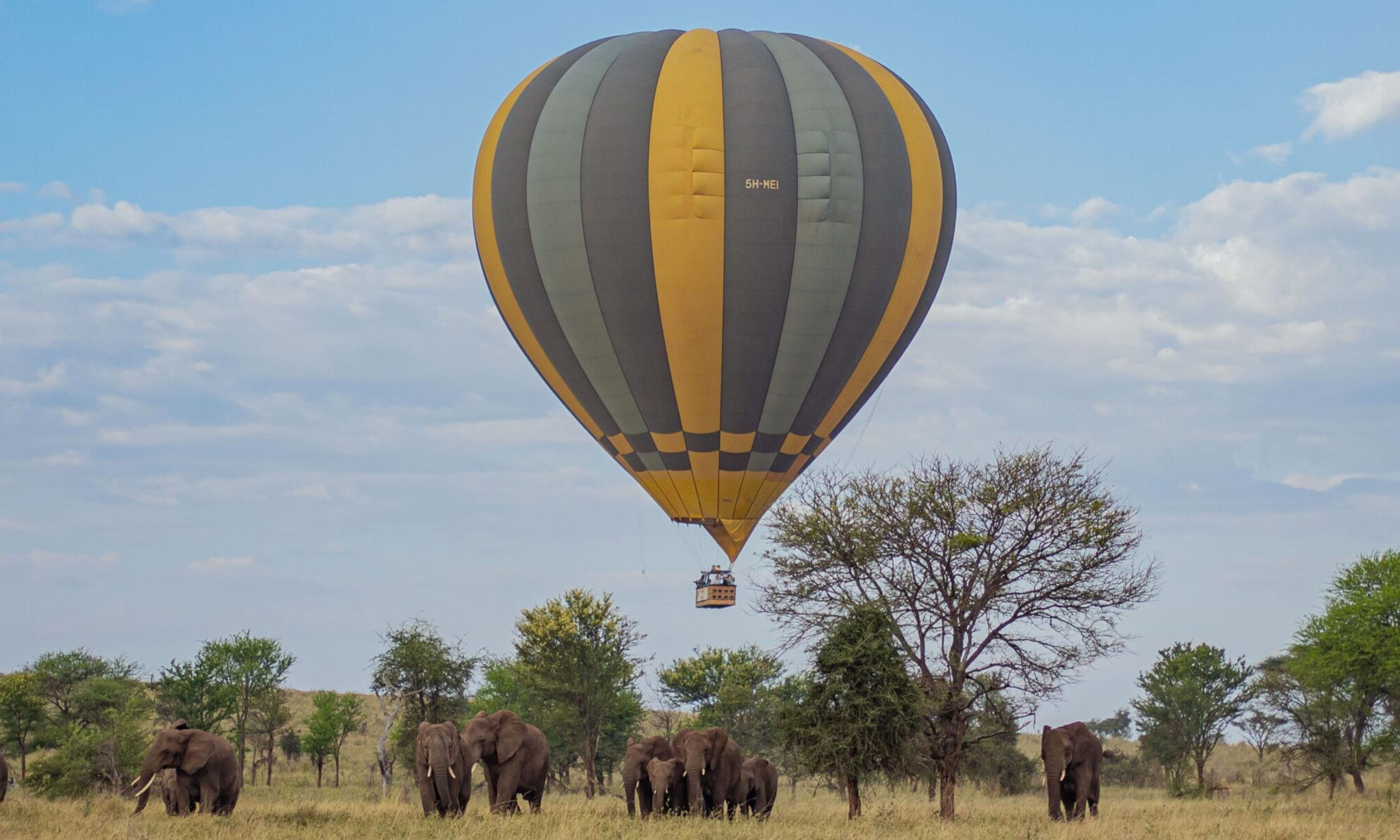
Tarangire · Elephants
Landing on the Plains
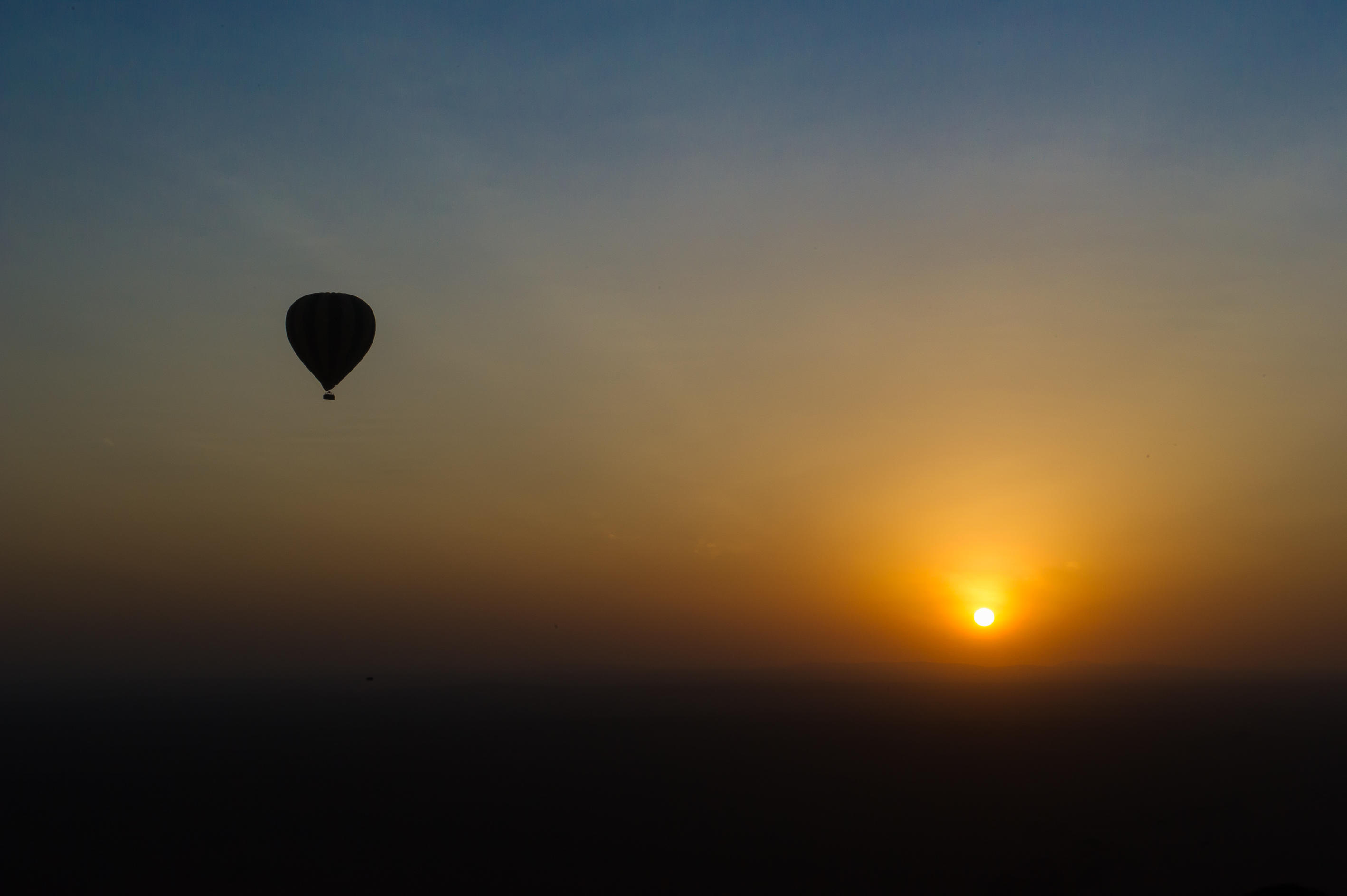
Golden Hour · Tanzania
Both flights operate year-round, departing daily at sunrise. Prices are per person and include the full bush breakfast experience. Add to any safari we operate.
Tarangire National Park
Float above Africa's elephant capital — baobab silhouettes, the Tarangire River bend, and massive herds from a height no vehicle can reach.
Serengeti National Park
The classic — one hour above the world's greatest wildlife spectacle. The migration, resident big cats, and 30,000 km² of endless plain, all from dawn-lit silence.
From the pre-dawn camp pickup to the champagne toast on landing — a complete guide to what your Tanzania balloon safari morning looks like.
Your guide meets you at camp with hot coffee or tea. The predawn air is cool and still. Transfer to the balloon launch site takes 10–30 minutes depending on your camp location — the drive itself often reveals nocturnal animals.
Watch your balloon inflate — a spectacular sight in its own right as the burners ignite and the envelope fills with warm air. Your pilot delivers a concise safety briefing. Cameras out: the inflation sequence against the pre-dawn sky is one of the great Tanzania photography moments.
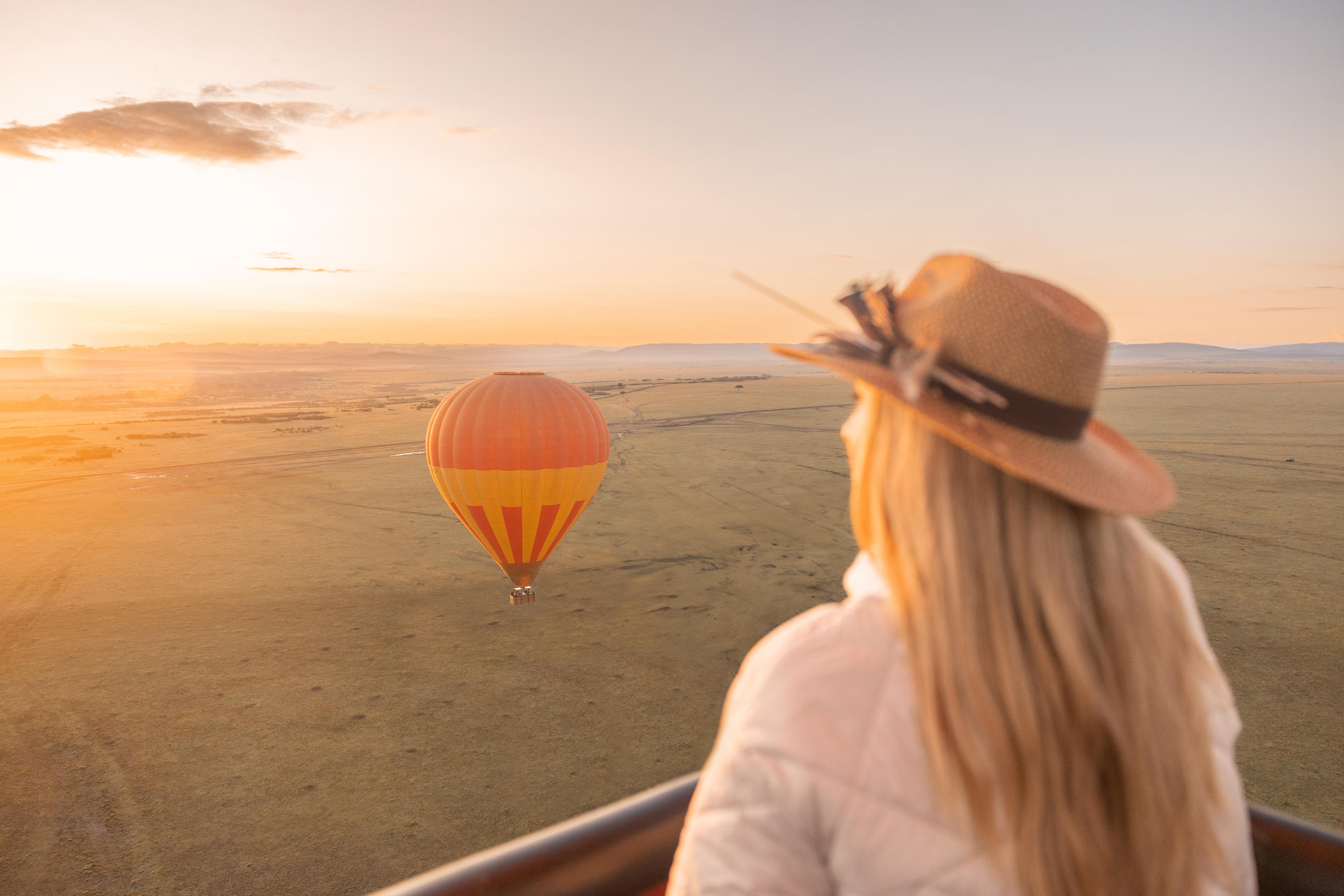
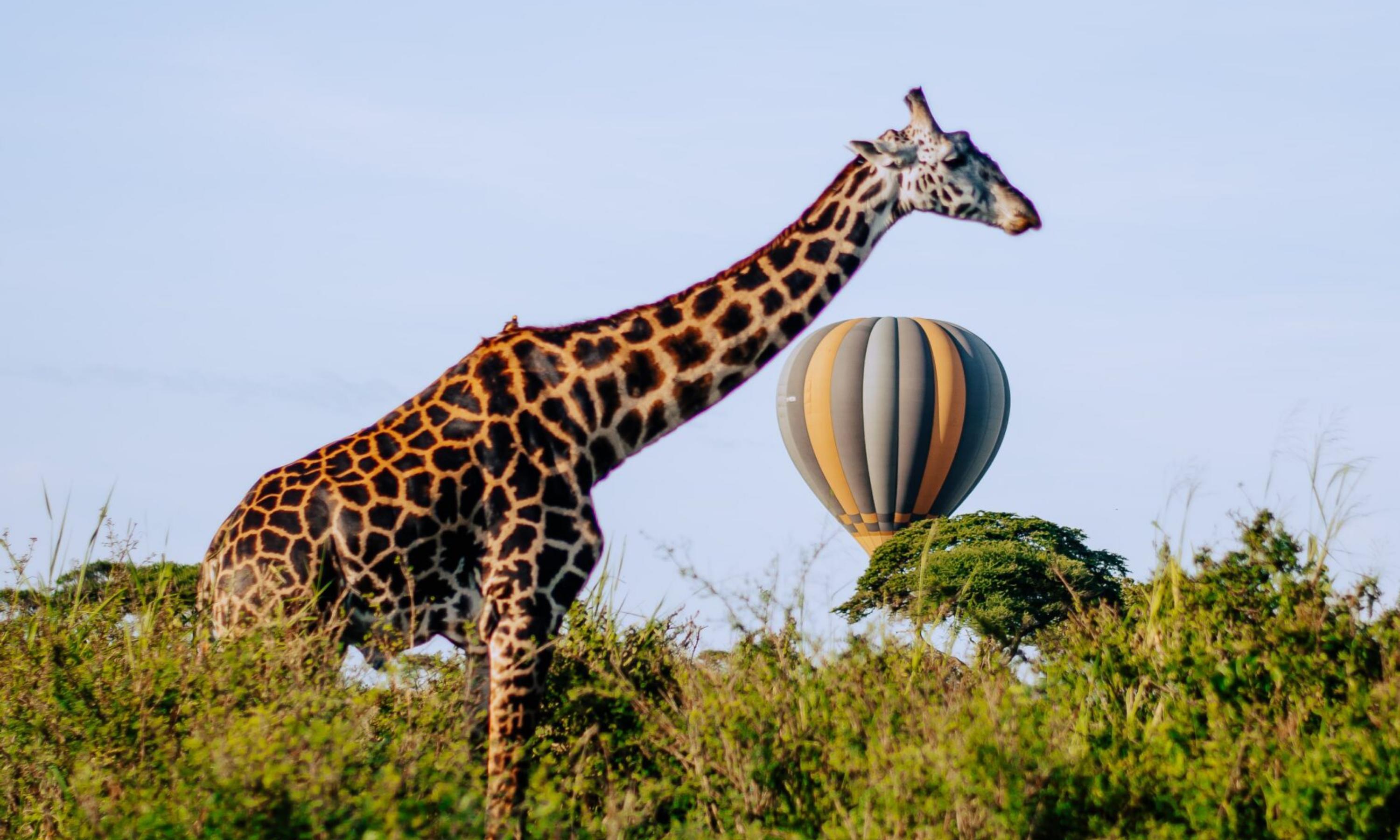
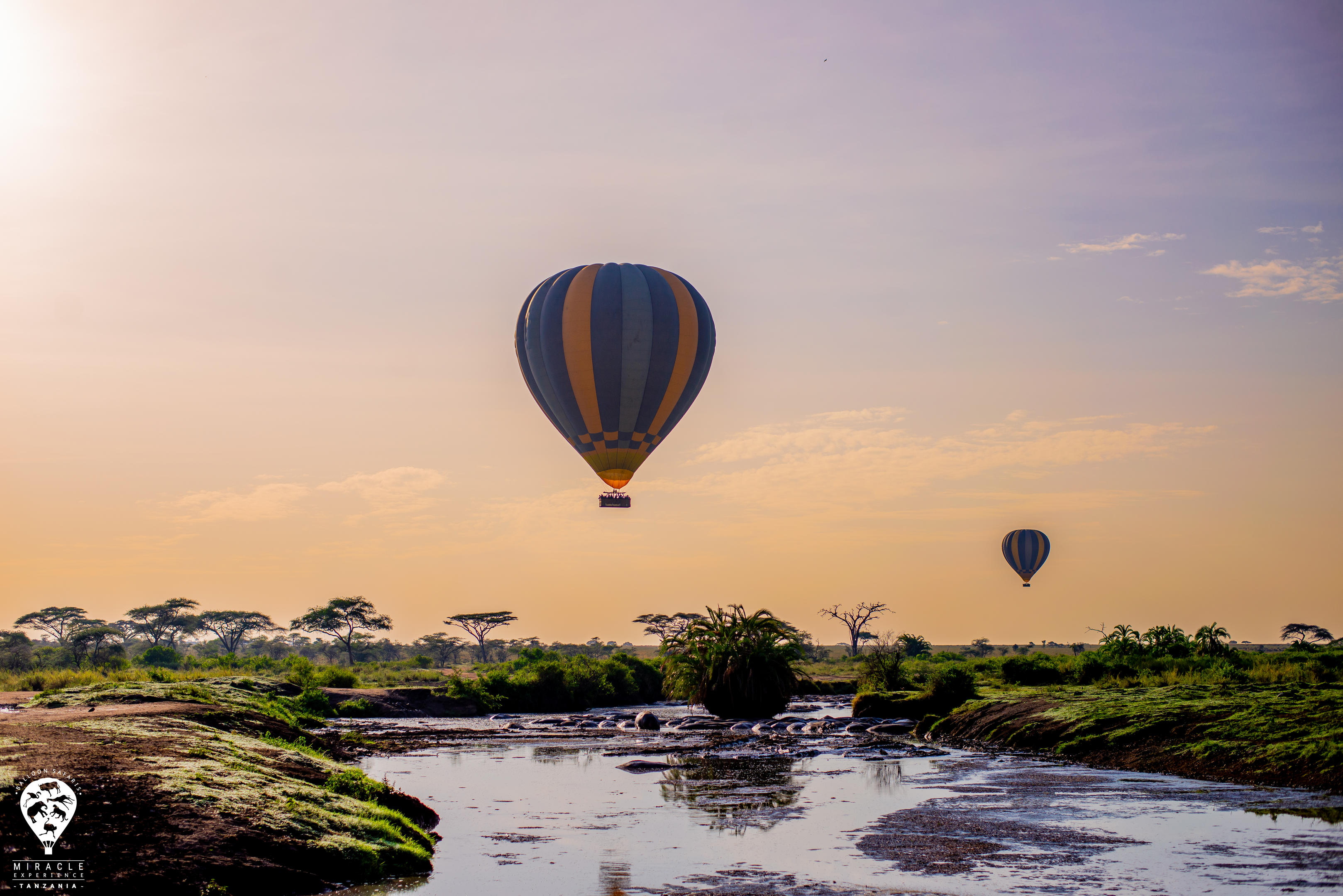
The balloon rises silently as the sun breaks the eastern horizon. Your pilot adjusts altitude to follow animal movement — low passes over elephant herds, wildebeest columns, and sleeping lions before rising high enough to see the plains stretch to the horizon. The light during this hour is extraordinary for photography.
Approximately 60 minutes in the air, covering up to 20 km depending on wind conditions. Your pilot — a qualified EASA or KCAA balloon pilot with extensive Tanzania experience — narrates the landscape and wildlife below. Baskets hold up to 16 passengers split across compartments; your group is positioned together.
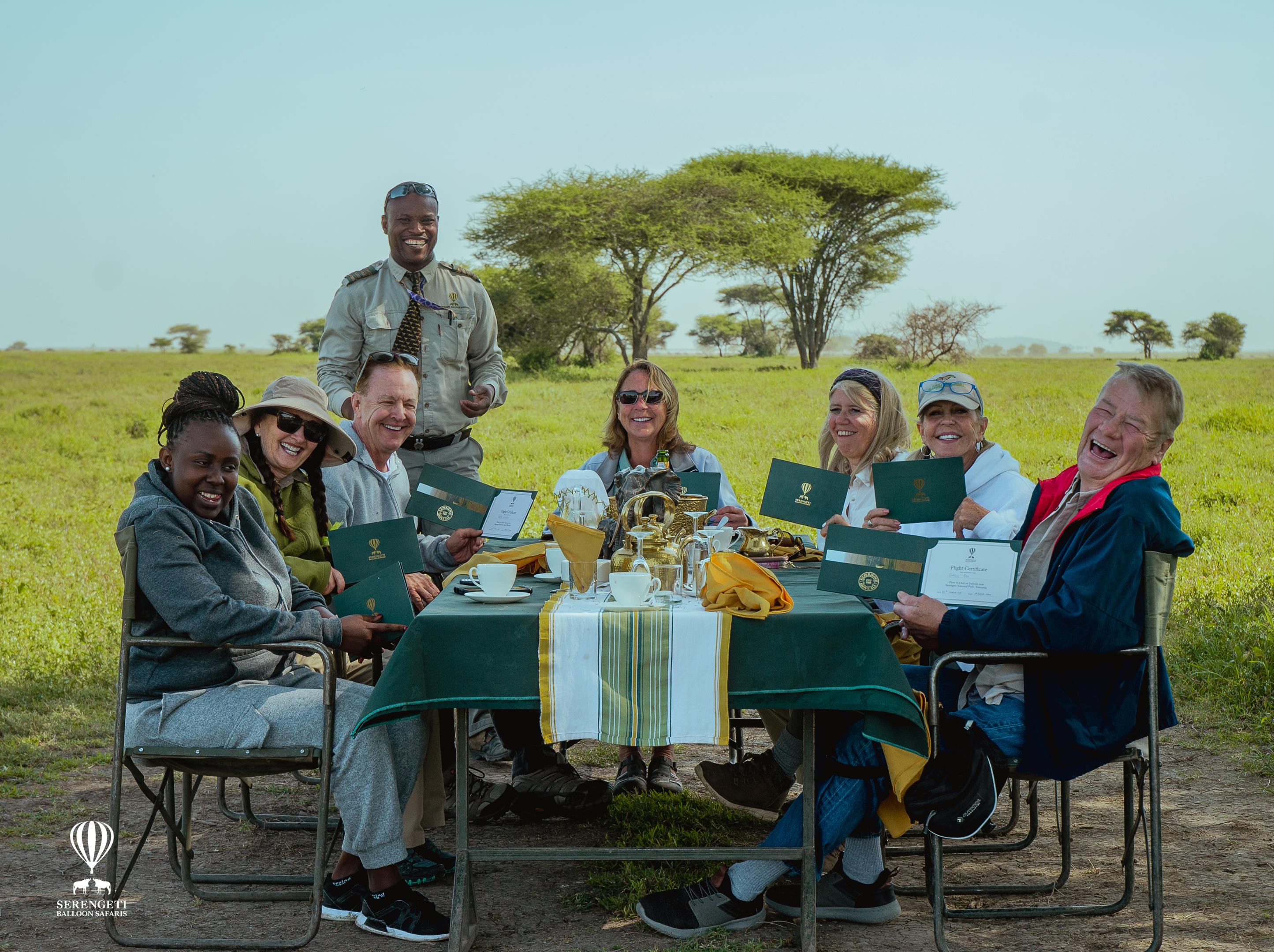
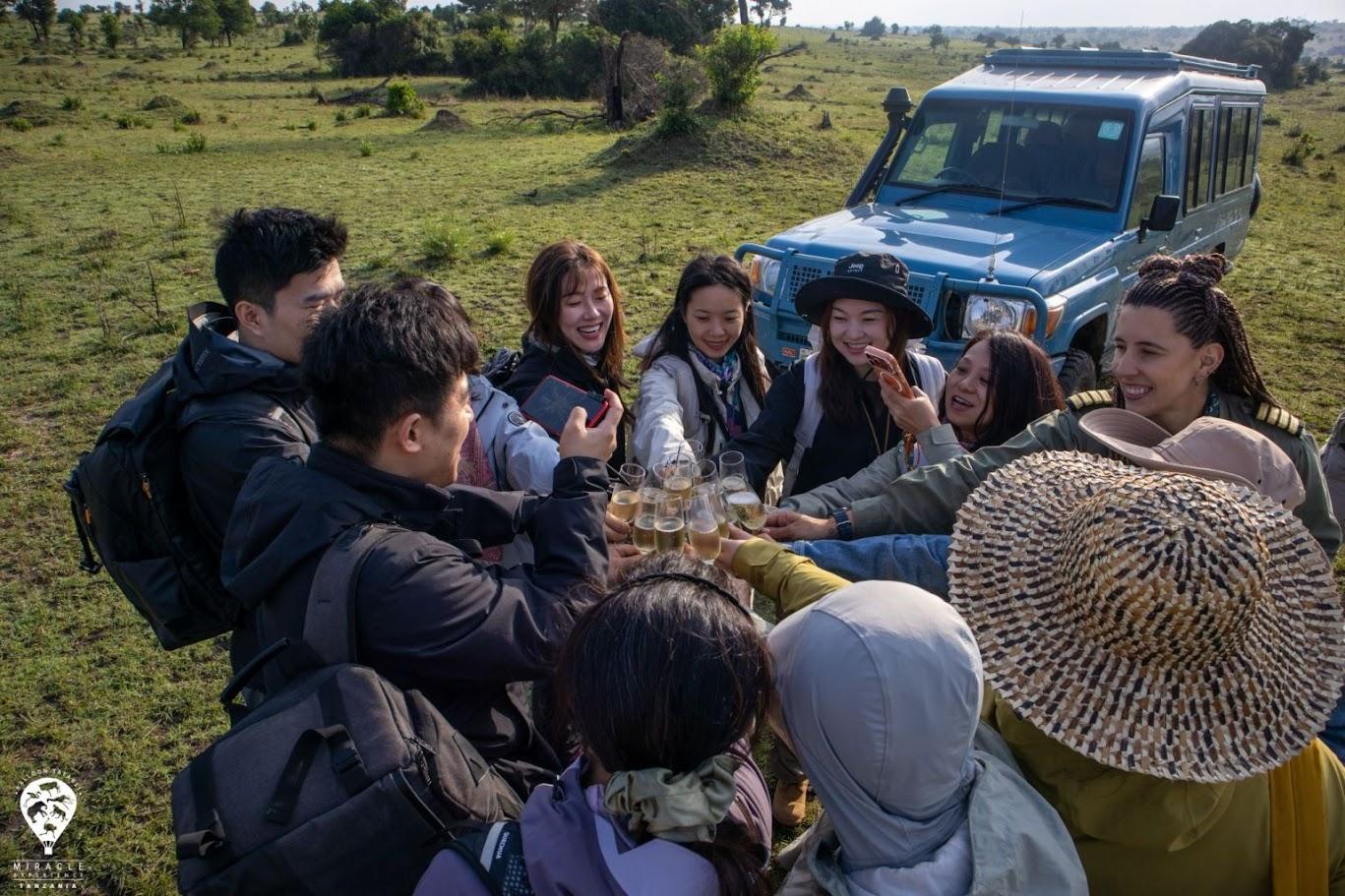
The balloon sets down gently on the plains — wherever the wind has taken you. A ground crew has followed by vehicle and laid a white-linen table in the bush: full cooked breakfast (eggs, sausages, fresh fruit, pastries, coffee, juice), champagne toast, and your signed flight certificate. Breakfast in the wild, a hundred kilometres from the nearest town.
Your guide collects you after breakfast for the return to camp — often via a morning game drive, as the animals are still active. You're back at camp in time for a mid-morning rest before the afternoon game drive. The balloon morning adds zero disruption to your safari schedule.
We believe in complete pricing transparency. No surprises on the morning of your flight.
Both the Serengeti and Tarangire offer year-round balloon flights. Here's what each season brings beneath the basket.
Wildebeest calving in the Ndutu area draws enormous predator activity. Balloon over the southern Serengeti for vast herds and cheetah action. Tarangire also excellent — green and lush.
Fewer balloons in the sky, dramatic skies, and saturated landscape colours. Some flight days are lost to weather, but those that fly are extraordinary. Significant price advantages on camps.
The most popular balloon window — clear skies, northern migration, and long golden hours. Tarangire peaks too with its enormous elephant concentrations. Book this window 4–6 months ahead.
Brief afternoon showers (rarely mornings) make this an excellent balloon window. Festive season bookings fill fast. Green landscape photography is stunning from the air.
Every itinerary below includes a balloon safari as an integral part of the journey — not an afterthought. Camp placements are chosen specifically for balloon access.
7 Days
Serengeti · Balloon
Arusha → Tarangire (2N) → Central Serengeti (3N + Balloon) → Ngorongoro → Arusha
The classic Tanzania circuit with the balloon as the centrepiece — three Serengeti nights positioned for morning flight access, plus a Ngorongoro crater descent to close.
8 Days
Dual Balloon
Arusha → Tarangire (2N + Balloon) → Serengeti (3N + Balloon) → Ngorongoro → Arusha
For the ultimate aerial experience — balloon both Tarangire's baobab landscape and the Serengeti's endless plain. Two completely different perspectives, one unforgettable journey.
10 Days
Cross-Border · Balloon
Nairobi → Masai Mara (3N) → Serengeti (3N + Balloon) → Ngorongoro → Arusha
Start in the Mara for game drives, cross into Tanzania, and end with a sunrise balloon flight above the Serengeti as the journey's most memorable crescendo.
9 Days
Migration · Balloon
Arusha → Tarangire → Central Serengeti → Northern Serengeti (Balloon) → Ngorongoro
Best Jul–Oct
Position in the northern Serengeti during peak migration months for the balloon flight — the wildebeest columns from above are a sight few humans on earth have witnessed.
12 Days
Honeymoon · Balloon
Arusha → Tarangire → Serengeti (Balloon) → Ngorongoro → Zanzibar (Beach)
The most romantic Tanzania itinerary — a sunrise balloon over the Serengeti as the emotional peak, before ending with four nights on Zanzibar's Indian Ocean coast. Perfect for honeymooners.
6 Days
Tarangire · Short
Arusha → Tarangire (3N + Balloon) → Ngorongoro (2N) → Arusha
The best short Tanzania balloon option — three nights deep in Tarangire for the balloon flight and elephant herds, then two nights on the Ngorongoro Crater rim to round it off.
Everything you should know before your morning of flight — safety, what to wear, photography tips, and booking essentials.
All Tanzania balloon operators must hold a licence from the Tanzania Civil Aviation Authority (TCAA). Pilots are EASA or KCAA qualified with thousands of flight hours. Balloons undergo regular airworthiness checks. The industry has an excellent safety record — your flight is with an experienced, certified team.
Bring your longest lens for wildlife detail, and a wide-angle for sweeping plains shots. Golden hour light at 6–7 AM is extraordinary. Secure your camera strap — the basket does gently rock. Memory cards and extra batteries are essential; cold morning air drains power faster. Leave the tripod behind.
Mornings on the plains can be cold (10–15°C in peak dry season). Wear warm layers — a fleece or light down jacket is ideal. The burners overhead radiate heat when active, so you'll warm up quickly once airborne. Closed shoes are preferable. Long sleeves for sun protection on the way up.
The standard weight limit is 120 kg (265 lbs) per passenger. This is a strict safety requirement and cannot be waived. Boarding requires stepping into the basket — generally one large step. The flight itself is stable and comfortable. Not recommended for pregnant guests or those with serious back or joint conditions.
Balloon operations are entirely weather-dependent. In the case of high winds, rain, or poor visibility, your pilot will cancel for safety. We provide a full rebooking at no charge for weather cancellations wherever your itinerary allows. We strongly recommend travel insurance that covers weather-related activity cancellations.
We strongly recommend booking your balloon as part of your safari reservation rather than on arrival. Peak season (Jun–Oct) Serengeti flights often sell out 4–6 months in advance. We hold allocation with the balloon operator — message us when you're ready to reserve and we'll confirm availability across your travel dates.
From our guides and photographers who have flown dozens of balloon mornings — what actually makes the difference between a good shot and an extraordinary one.
The pre-launch balloon inflation, silhouetted against the pre-dawn deep blue, is one of the great Tanzania photography sequences. Arrive before the crew begins and shoot the entire process. Many guests focus so heavily on the flight that they miss this.
The most striking Serengeti balloon images use a wide lens to capture the vast scale of the plains at altitude. But bring a 200–300mm lens too — low passes over wildlife give genuinely intimate shots of animals looking up.
A wide-angle shot that includes the balloon basket or burner in the foreground, with the plains below, creates the sense of perspective and altitude that pure landscape shots miss. This is the shot that tells the story.
When your pilot descends low over a herd, the encounter passes quickly. Set your camera to burst/continuous mode and shoot freely — you can cull later. The motion of the basket means sharp focus is inconsistent, so volume helps.
When multiple balloons are flying, the adjacent balloon drifting over the plains at sunrise is one of the most iconic Tanzania images possible. Watch for moments when it's positioned against the sunrise sky or over a wildlife-dense area.
The white-linen table set in the wild, champagne glasses, and the deflated balloon in the background is a uniquely powerful image. Before you eat, walk around the table and shoot it from multiple angles — it's a story in a single frame.
This one matters. At some point during the flight, put the camera down deliberately and just look. The silence, the scale, and the light are things no lens fully captures. Those five minutes without a viewfinder are often what guests remember most vividly years later.
Unprompted feedback from travellers who flew with us in 2024 and 2025.
"The balloon was the single most magical hour of our lives. We floated over three lion cubs sleeping and a river crossing happening simultaneously below. I've done extraordinary things on six continents — nothing has come close."
"We almost skipped the balloon because of the cost. Our guide convinced us. We both cried on landing — from sheer beauty and the realisation that we'd nearly missed it. Book it. There's no question."
"The Tarangire balloon with the baobab trees below us and 400 elephants in the riverbed — I've photographed for National Geographic and this was in my top five mornings of my career. The champagne breakfast was rather good too."
"We did both — Tarangire and Serengeti. Two completely different experiences. The Tarangire dawn with baobabs emerging from the mist, and then the Serengeti with wildebeest everywhere. Our pilot was exceptional — knowledgeable, precise, safety-conscious."
"Our honeymoon. The balloon was how we woke up on the morning of our first full Serengeti day. We toasted champagne at 6,000 feet above the plains as the sun came up. I proposed on the ground at breakfast, overlooking the plains. She said yes."
"I was nervous — I'm not great with heights. The balloon is different from any height I've ever experienced. There's no floor-dropping sensation, no fear. Just absolute peace. Our pilot was wonderful with me. The breakfast was extraordinary. I would do it again tomorrow."
Everything our guests ask before, during, and after booking their flight.
A Tanzania balloon safari costs USD 550 per person over Tarangire National Park and USD 599 per person over the Serengeti. Both prices are for 2026/2027 season and include the flight, a full champagne or cooked bush breakfast on landing, all park fees, transfers from and back to your camp, and your official flight certificate. There are no hidden extras beyond personal gratuities, which are discretionary.
This is the most common question we receive, and our answer is consistent: yes — overwhelmingly. The balloon provides a perspective on the Serengeti that is categorically different from any game drive. The silence, the altitude, the dawn light, the champagne breakfast in the wild — it is frequently the experience our guests cite as the highlight of their entire safari, regardless of everything else they did. Very few guests who have done it would have skipped it knowing what they know now.
The balloon flight itself lasts approximately 60 minutes in the air. The full morning experience — from camp pickup (around 5:00–5:30 AM) to return to camp after breakfast — takes roughly 3.5 to 4.5 hours in total. You are typically back in camp by 9:00–9:30 AM, leaving the rest of the morning for game drives or relaxation.
All Tanzania balloon safaris depart at sunrise — typically around 5:30–6:00 AM depending on the season. You will be woken at approximately 4:45–5:00 AM for hot coffee or tea before transfer to the launch site. The early hour is essential: it's when the light is most beautiful, the air is calmest for flying, and the animals are most active.
Tanzania balloon safaris have an excellent safety record. All pilots are certified by the Tanzania Civil Aviation Authority and hold international qualifications. All balloons undergo regular mandatory airworthiness inspections. A chase vehicle follows the balloon throughout the flight at ground level. Emergency landing procedures are reviewed in the pre-flight briefing. The single most common safety decision made is cancellation due to weather — which itself is a safety measure. We do not fly in unsuitable conditions.
The Serengeti balloon operates year-round, and every season has its character. June to October is the dry season peak — the northern Serengeti sees the Great Migration and Mara River crossings, visibility is superb, and skies are reliably clear. January to March offers calving season in the southern Serengeti, with extraordinary predator activity. November and December are the short rains shoulder — fewer guests, green landscapes, and good value. April and May see more flight cancellations due to weather but exceptional photographic conditions when it flies.
Children under 7 years of age are not permitted on Tanzania balloon safaris. Children aged 7–12 are allowed at the pilot's discretion, and we recommend contacting us to discuss your specific situation. Children aged 13 and above fly under the same conditions as adults. The basket wall height is approximately chest-level on most adults — smaller children may not be able to see over without assistance. We recommend families with young children consider this when planning.
Yes — if you have a Tanzania safari already booked with us, we can add a balloon flight to any night spent in the Serengeti or Tarangire. Message us with your travel dates and current camp details and we will check availability and issue an updated cost quote. We cannot add balloon safaris to itineraries operated by other companies, but we can arrange a standalone balloon morning with transfers if you are staying nearby.
If your balloon flight is cancelled by the operator for weather, safety, or mechanical reasons, you are entitled to a full refund or rebooking. Where your itinerary allows, we will rebook you on the next available morning. In cases where there is no subsequent opportunity within your safari dates, the full balloon cost is refunded. We strongly recommend travel insurance that covers activity cancellations — this covers circumstances where rebooking is not possible.