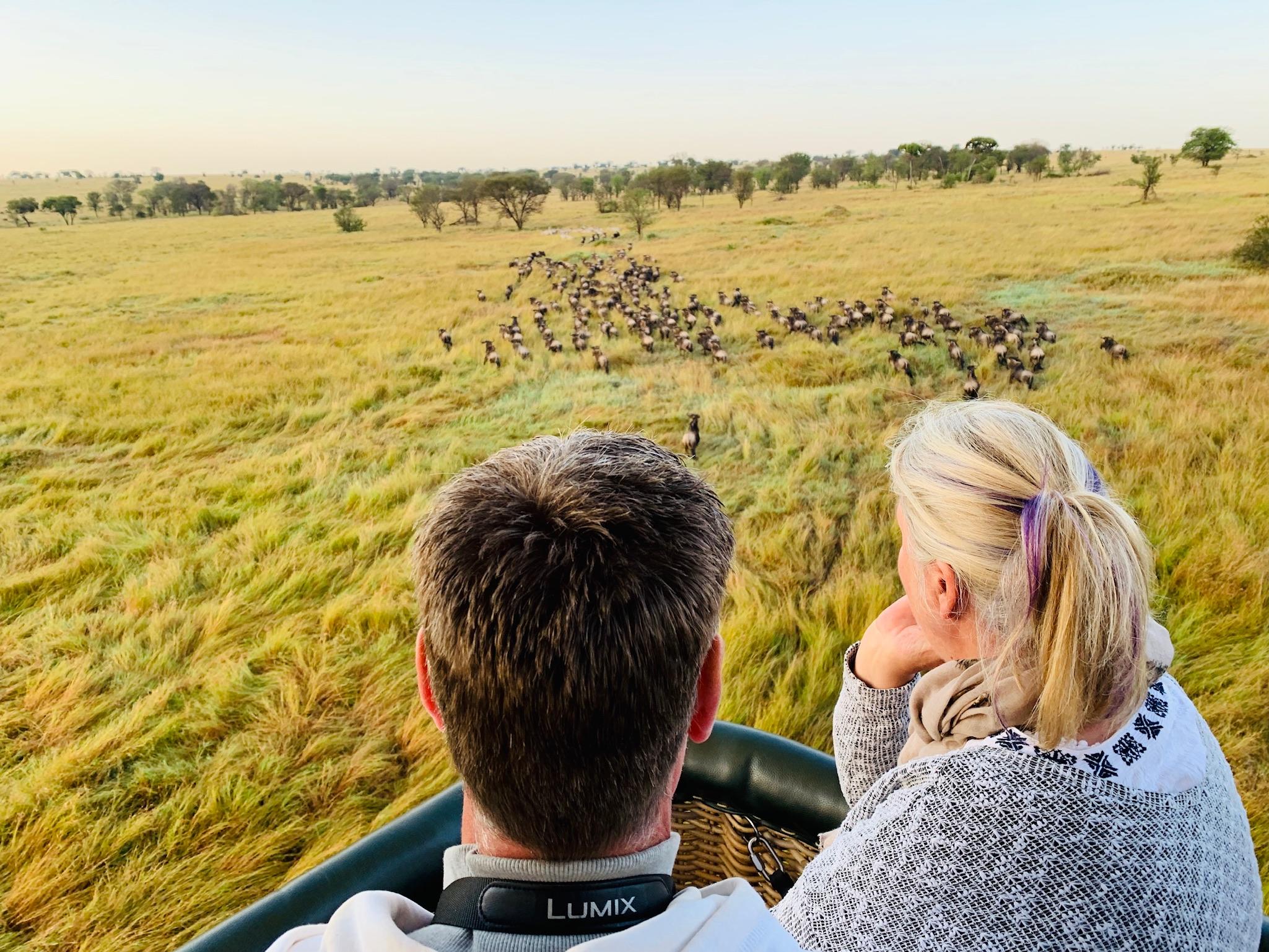
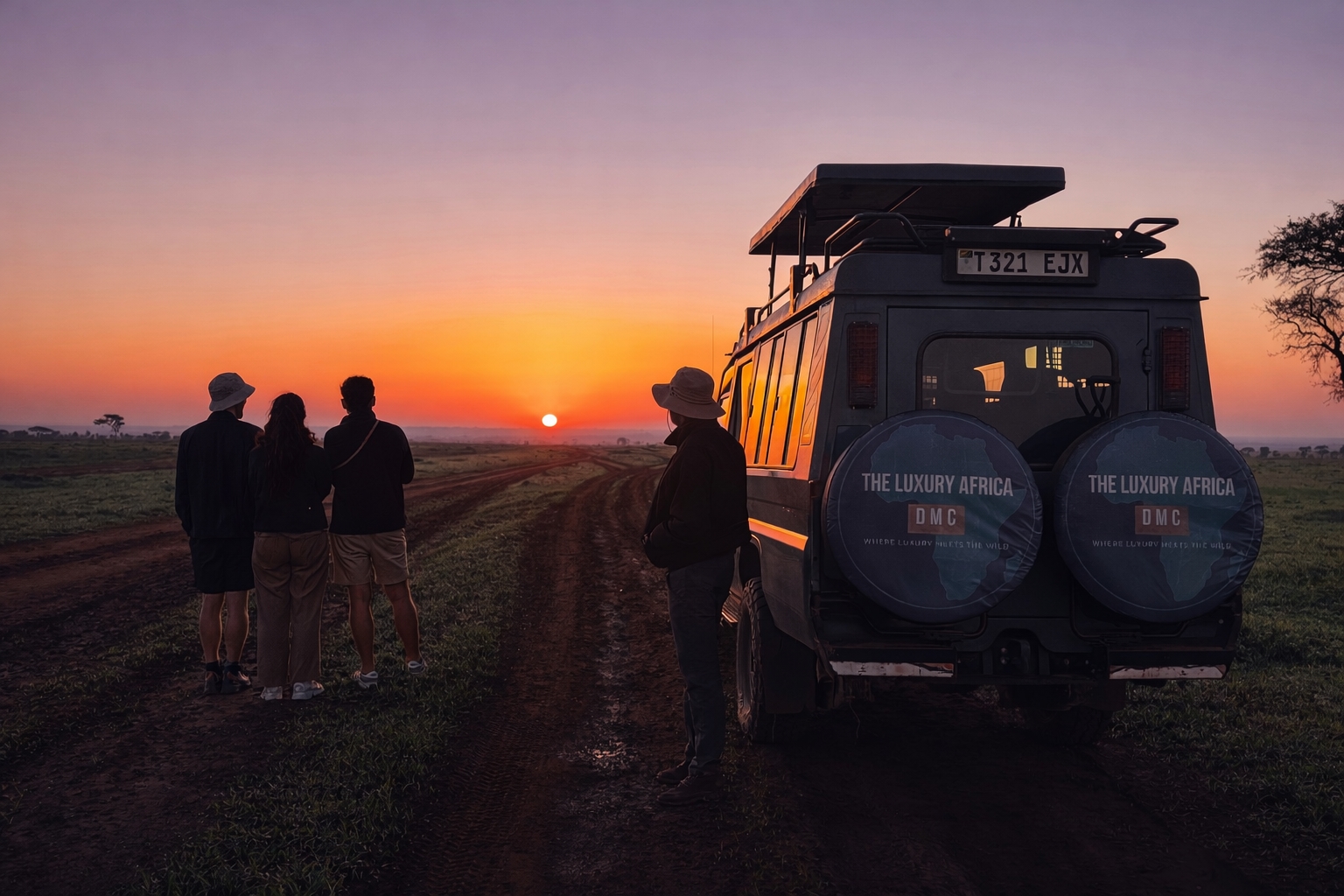
8-Day Tanzania Private Safari
8 daysFlexible pacing with a private guide, quality lodge choices, and longer game-drive windows in Serengeti and Ngorongoro.
Explore Journey →Budget vs Mid-Range vs Luxury • Private vs Group • Serengeti & Ngorongoro • Sample Cost Breakdowns
★★★★★ 5.0 | 263 ReviewsQuick Answer: Tanzania safaris can range from budget group camping to ultra-luxury fly-in experiences. Your final cost depends on season, accommodation, parks, and whether you travel private or shared.
See Quick Cost Ranges →If you’re researching Tanzania safari cost, you’ve probably seen prices that feel all over the place—anything from a few hundred dollars to several thousand per person. That’s not because anyone is trying to confuse you. Tanzania is one of Africa’s most rewarding safari destinations, and it also has a wide range of safari styles: shared group safaris, private lodge safaris, fly-in itineraries, family-friendly routes, and high-end experiences that prioritize exclusivity and premium locations.
This guide breaks down the real cost of a Tanzania safari in 2026 in a clear, practical way. You’ll learn what’s typically included, what increases price, how season affects rates, and how to build a trip that matches your expectations without paying for things you don’t need. We’ll also share sample budgets and planning tips for Tanzania’s most famous highlights—Serengeti, Ngorongoro Crater, Tarangire, and Lake Manyara.
If you want a tailored quote (private or shared), our team at The Luxury Africa DMC can price your exact travel dates and preferred lodge level, then recommend the best value route based on wildlife season, comfort level, and time available.
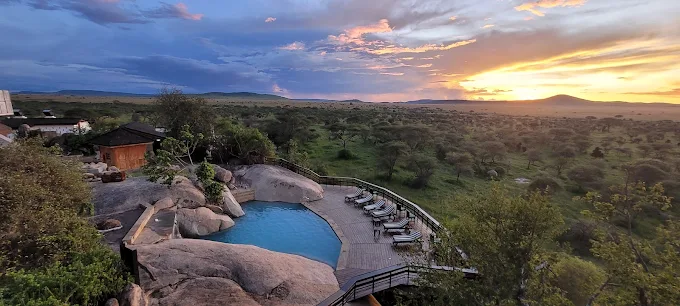
Tanzania safari pricing is usually best understood as a per person, per day range. Your daily cost includes the safari vehicle, guide, logistics, park fees (often the biggest “fixed” cost), and accommodation and meals. Once you know your comfort level and whether you want private or shared travel, it becomes much easier to estimate your total.
| Safari Style | Typical Cost (pp/day) | Best For |
|---|---|---|
| Budget (shared / camping) | ~ $250–$450 | Backpackers, students, flexible travelers |
| Mid-range lodge (shared or private) | ~ $450–$900 | Most couples, families, first-time safari guests |
| Luxury lodge / tented camp (private) | ~ $900–$2,000+ | Honeymoons, special trips, comfort & exclusivity |
| Fly-in safari add-on | + $250–$600+ (per flight segment) | Short trips, comfort, maximizing Serengeti time |
A helpful planning method is to estimate your expected daily range, then multiply by the number of safari days (usually excluding international flight days). After that, add visas, tips, and any domestic flights if they’re not already included in your package.
Tanzania safaris are not priced “randomly.” Most costs come from a few predictable drivers. If you understand these levers, you can build a safari that feels premium and smooth—without accidentally paying for the wrong upgrades.
Season affects both accommodation rates and demand. Peak dates (popular dry-season windows and holiday periods) are the most expensive. Shoulder season often offers excellent wildlife with better lodge value. Green season can be very rewarding (lush landscapes, fewer crowds), though some travelers prefer dry roads and predictability.
In Tanzania, the accommodation category is often the single biggest price difference. A lodge outside a park boundary may cost less, but you’ll spend more time commuting. A camp inside Serengeti in a prime area costs more, but it can deliver more game-drive time and better early-morning positioning. The “best value” is usually a lodge that balances comfort, location, and practical driving times.
A private safari costs more, but it gives you control: longer sightings, photography positioning, flexible starts, and custom pacing. Shared safaris reduce cost, but you trade flexibility—especially if you have specific wildlife goals (big cats, migration, birding).
Serengeti and Ngorongoro are signature experiences—so they come with premium fees and high lodge demand. Tarangire and Lake Manyara can be more cost-friendly while still offering exceptional wildlife diversity. The most cost-efficient itineraries usually combine a strong Serengeti/Ngorongoro core with one additional park that matches your interests.
Fly-in itineraries are a comfort upgrade and a time-saver, particularly for 5–7 day trips. They add cost, but they also reduce long road transfers, which can be a major factor if you want to maximize game-drive hours in Serengeti.
One of the biggest pricing “forks” is whether you choose a private safari or a shared group safari. Both can be excellent, but they suit different travel styles. Here’s what the price difference is really buying you.
Private safaris include an exclusive vehicle and guide for your party. You decide when to leave, when to stop, how long to stay on a sighting, and whether the day is more relaxed or more intense. This is ideal for honeymoon couples, families, and travelers who want a smoother rhythm (and fewer compromises).
Group safaris reduce cost by sharing vehicle and logistics. The trade-off is pacing: pick-up routes may be longer, safari days may be more fixed, and you’ll share sighting decisions. If you’re flexible and social, a group safari can be a great way to experience Tanzania at a lower price.
Instead of obsessing over one “average price,” it’s smarter to understand how your park mix impacts cost. Some parks are naturally more expensive because they require multiple days, longer transfers, or higher-demand accommodations.
Serengeti is usually the largest cost component because travelers spend multiple nights there, and lodge rates inside the park can be premium—especially in high season. The value is extraordinary: big cats, vast plains, and year-round wildlife density that justifies staying at least 2–3 nights.
Ngorongoro is iconic, and it often adds cost because of conservation fees and crater access logistics. Many itineraries add one highland overnight to position you for an early crater descent. It’s one of the best areas in Tanzania for high wildlife density and strong chances at memorable sightings.
Tarangire is a value favorite: excellent elephant encounters, baobab landscapes, and strong dry-season concentrations. It’s also logistically easier from Arusha, which can help keep costs efficient while still delivering a very “wild” feel.
Manyara is typically a shorter visit (often a day trip or one night). It’s known for its groundwater forest, birdlife, and scenic Rift Valley setting. It’s a great “contrast park” after Serengeti and Ngorongoro and fits well into mid-range and luxury itineraries.
Below are planning examples to help you estimate what your trip might cost. These are not “one size fits all,” but they show how budgets change with length, comfort level, and logistics choices like fly-in segments.
Short safaris usually prioritize Tarangire + Ngorongoro (or a single focus park). Costs vary by accommodation and whether it’s private or shared. If you are connecting from Zanzibar, a fly-in can boost price but saves time and increases wildlife hours.
Five days is a strong value point: enough time for Serengeti and Ngorongoro without feeling rushed. Many first-time travelers choose this length and then extend with a beach stay or a second safari region.
Seven days allows deeper Serengeti exploration, a crater day, and Tarangire or Manyara for variety. If you want comfort and maximum wildlife time, a fly-in Serengeti route can be an excellent upgrade.
Ten days allows slower pacing, extra Serengeti nights, and more flexibility for special experiences (balloon safari, sundowners, private dinners). It’s ideal if you want a premium feel without rushing.
The goal isn’t just to “spend less”—it’s to get the best safari experience per dollar. Here are the most effective cost-saving strategies that don’t damage your trip quality.
Shoulder season often offers excellent wildlife with fewer crowds and more favorable rates. It’s one of the easiest ways to reduce cost while improving comfort.
Adding too many parks can increase transfers and reduce game time. Often, it’s better to stay an extra night in Serengeti and simplify the route.
A smart mid-range lodge in a good location can outperform a cheaper lodge in a poor location. Less commuting = more wildlife time.
You don’t always need multiple flights. Often, one strategic flight (e.g., Arusha → Serengeti) can improve comfort and time, while the rest is driven efficiently.
As a broad planning range: budget safaris often land around $250–$450 per person per day, mid-range around $450–$900, and luxury around $900–$2,000+. Private travel, peak dates, and premium Serengeti locations increase cost.
Ngorongoro is premium because it’s a world-class protected area with high conservation value. Many itineraries include a highland overnight to ensure an early crater descent, which also affects overall trip cost.
For many travelers, 5–7 days is the best balance of Serengeti time and cost efficiency. Shorter trips can feel rushed unless you fly in. Longer trips offer premium pacing and deeper exploration.
Yes—share your travel dates, number of people, and comfort level (mid-range or luxury). We’ll suggest the best route and provide a clear quote with inclusions listed line-by-line.
Budget: $250–$450 pp/day
Mid-range: $450–$900 pp/day
Luxury: $900–$2,000+ pp/day
Fly-in add-on: +$250–$600+ per segment
Want a precise quote? Use the inquiry form below.
Three hand-picked options from our collection—ideal if you want a private upgrade, a longer fly-in experience, or a classic Northern Circuit route.